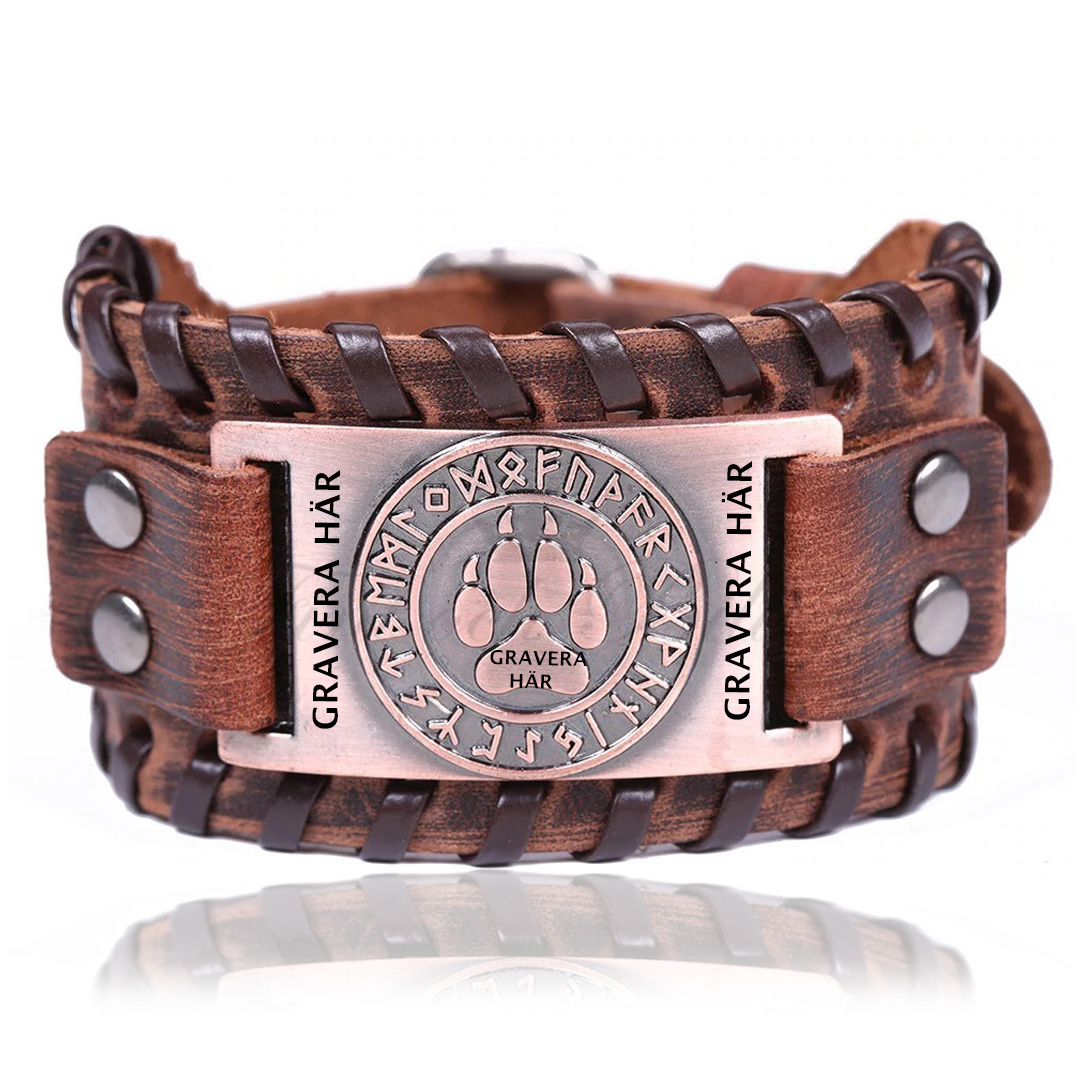
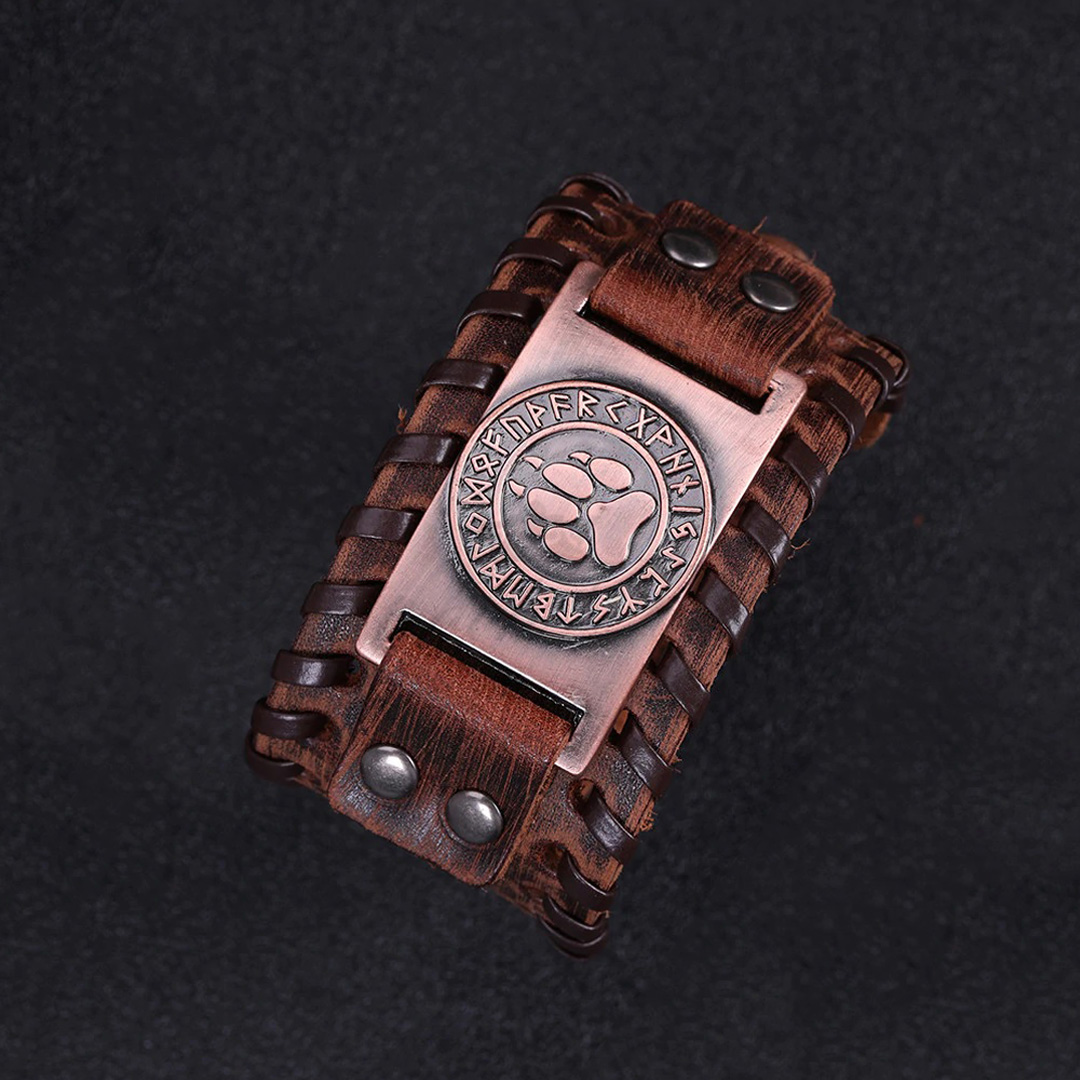
Bracelet - Berserker Wolf Paw Viking Rune - Wolf Paw Futhark
€18€17
Lowest price in the last 30 days€17(Optional)
(Optional)
(Optional)
(Optional)
 ✅ Pay after delivery. Safe and secure with Svea.
 Secure payment by card
 Paypal Secure and Fast payment
Order your personalized - Berserker Wolf Paw Viking Rune - viking bracelet today.
• Price guarantee
• Always top quality.
• Fast delivery. 1-day delivery time
• Professional and fast customer support.
• Leather bracelet
• Nickel-free
• much appreciated gift
• Nice and Cheap
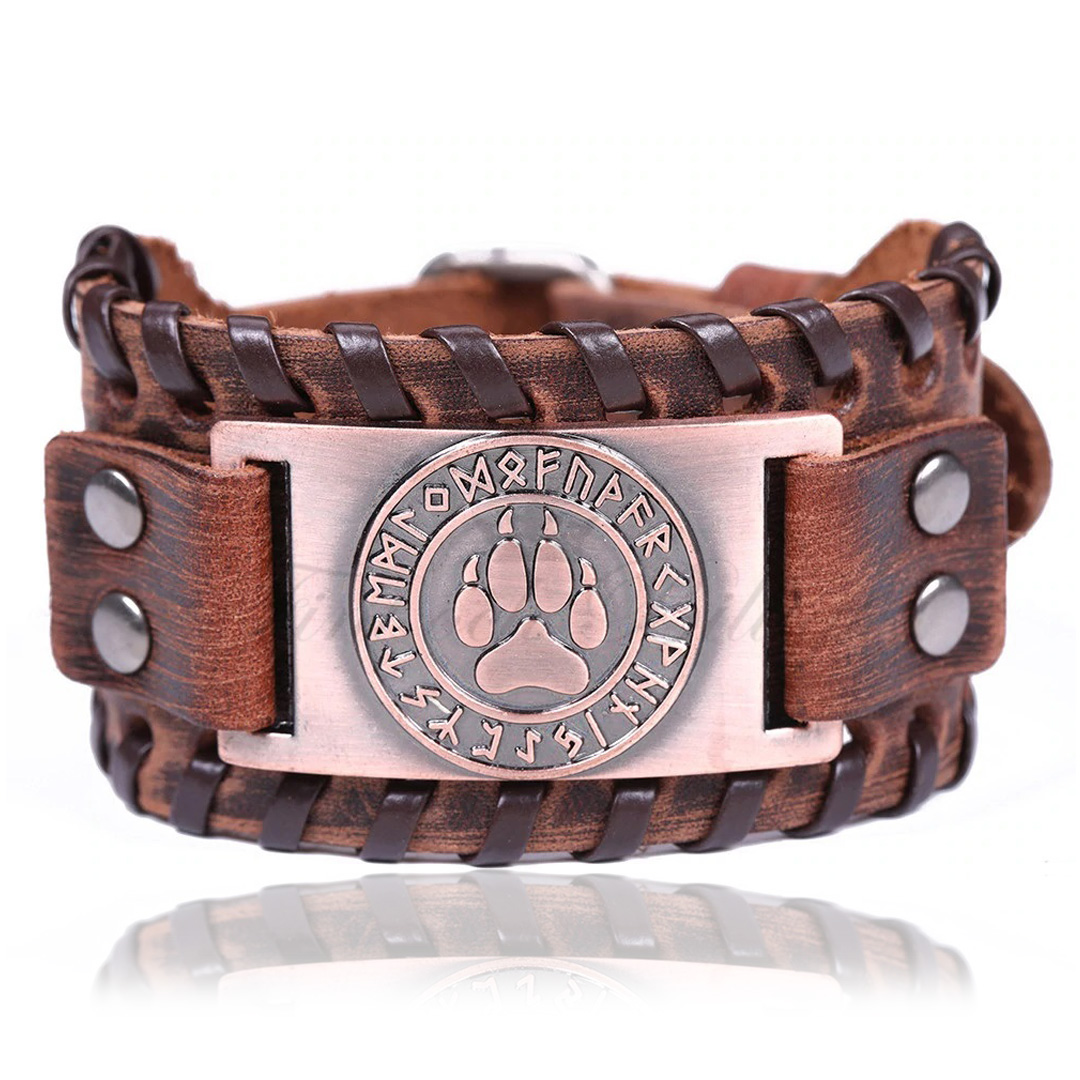
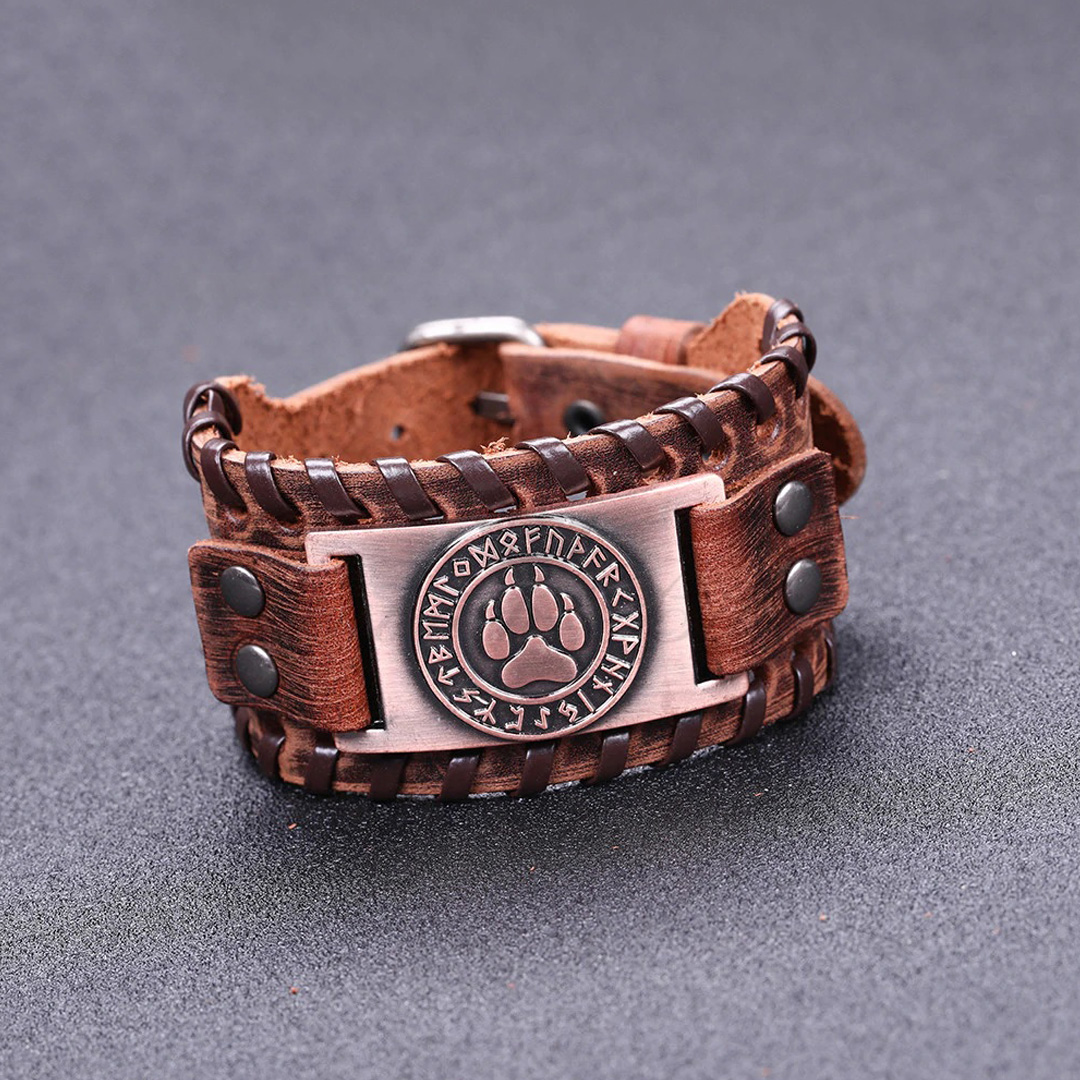
Berserker Wolf Paw Viking Rune is a handmade viking bracelet in brown leather with an amulet in the form of a wolf paw surrounded by the 24 Old Norse "Futhark" runes for divination, spells and the patron saint. The wolf paw is the symbol of a variant of Bärsärkar. Odin's special warriors, also called Ulvhedin or Ulfhednar which means wolf skin furs.
Add engraving and personalize your Viking bracelet. Perfect as a name bracelet, gift or Christmas present. Excellent gift ideas for Mother's Day or Father's Day.
Description
Article no.: ABL012
Model: Berserker Wolf Paw Viking Rune Wide Braided - Leather Bracelet
Material: Leather, silver plated metal alloy
Color: Brown, Antique Copper
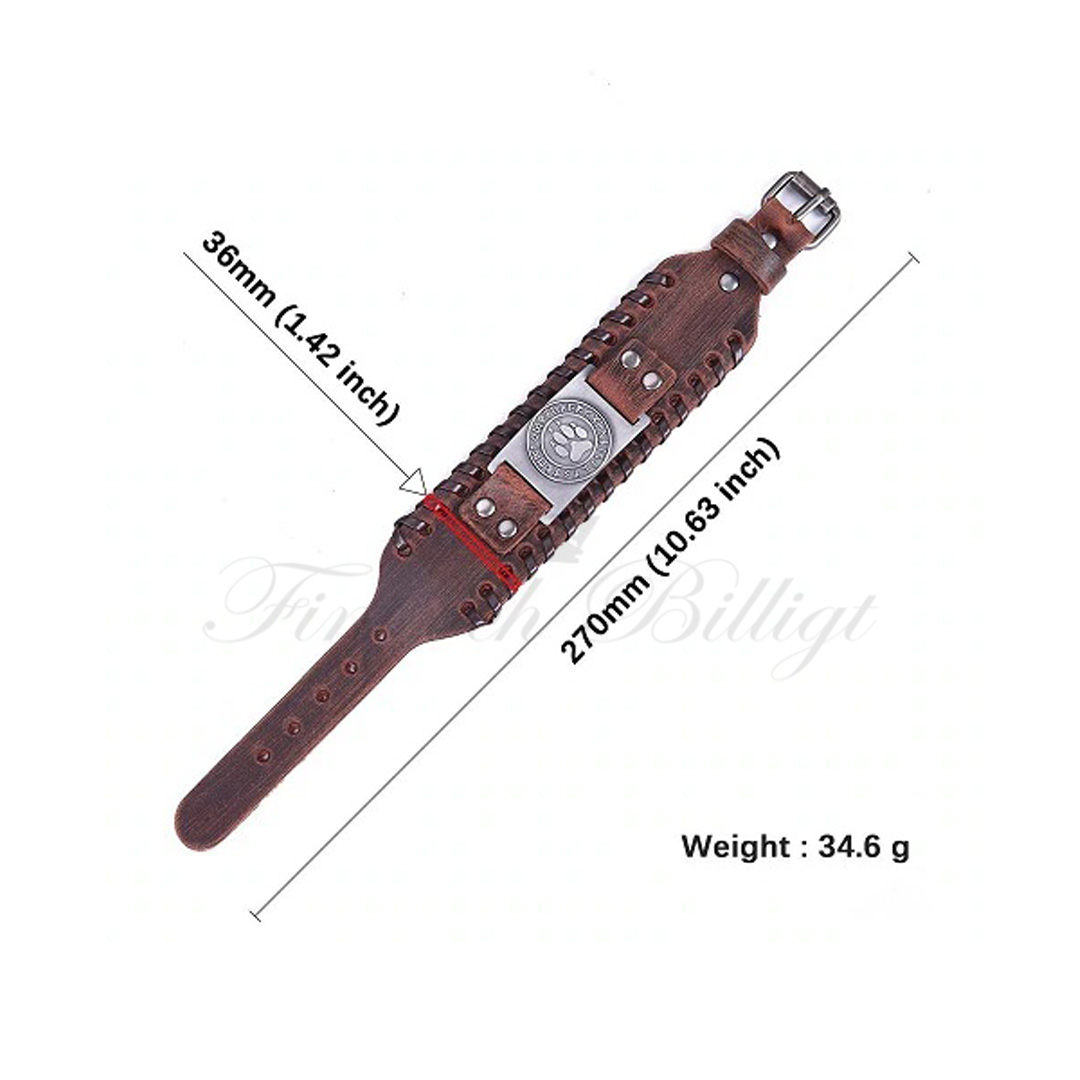
Size: 270 x 36mm
Adjustable length: 180mm-200mm
Weight: approx. 35g
Category: Unisex
Made of environmentally friendly zinc alloy and is nickel-free
Choose a personal font for your jewelery from FintochBilligt.
If you want a different font than the standard one, you can specify which font you want.
Please select one of the options in the file: Font engraving jewelry Fint och Billigt.
You can also choose any font in Word.
If you want a different font, this can be arranged for an extra cost.
Note! Keep in mind that the text can be difficult to read with a squiggly font in a small ring or piece of jewelry.
This beautiful handmade Viking jewelry in the form of a wolf's paw with the 24 Old Norse runes around it, which originates from about 200 years after Christ, makes this Viking bracelet a piece of history in itself.
The wolf paw is the symbol of Odin's famous warriors, the so-called Ulvhedin or Ulfhednar, a variant of the Bears.
During the Old Norse era, a bearserk was a warrior who, according to legend, swore allegiance to Odin. These berserks were then given the combat temperament of Oden or some wild animal in close combat (usually wolf or bear).
The word Bärsärk comes from: "björnsärk"; särk which means shirt or clothing.
Bärsärk was also called a wandering perpetrator of violence who challenged people to duels.
According to legend, the Berserks wore bear skins in battle and thus had to share in the fury of the female bear when she protects her cubs. The phrase ber meant bear (from the German berry) and serkr shirt or garment.
In several ancient cultures, the bear and the wolf had a special status as sacred animals and as such were especially associated with the god Odin among the Germanic tribes. It was also primarily animals that were associated with higher status. The old Gothic kings often dressed in bearskin clothing. In Icelandic sagas, the bearers appear as special warriors who wear bear clothing, but also as harbor shifters. A harbor shifter is a person who, in a trance, materializes in battle as an invulnerable bear.
There are many different myths about the berries.
One was that it was believed that berserk (berrserkr) meant "bare shirt". This has partly been interpreted as bare-breasted, naked, and that the bearers fought bare-chested. This has later been shown to be incorrect as the information about naked berserks came from a Roman source who probably did not even have contact with the berserks and is considered unreliable.
According to another myth, berserk has also been interpreted as "just the shirt". So warriors without armor or armor. These theories have today been abandoned.
The most widespread myth about the Berserk is that they would have eaten red fly agaric before battle and that it was this that caused the Berserk attack. Nowadays, it is considered that the intoxication from red fly agaric can hardly be beneficial in battle as the intoxication often leads to euphoria, drowsiness, slurring, discomfort, nausea, headache, and can also be a danger to life in large quantities.
The rune line that was mainly used in divination is the Old Norse 24 rune futhark which arose around 200 years after Christ. It is called futhark because the first 6 runes form the word futhark; feh, ur, thurs, ass, reid and ken.
The purpose of the runes was mainly to record various things but also for divination and spells. Divination with runes is an ancient tool that has close contact with our ancestors and their traditions.
- BrandFint och Billigt
- ColorBrun/Koppar
- ConditionNew
- MaterialLäder
- Suggested age groupAdult (typically teens or older)
- Suggested genderMale
Files and media
 | Font engraving jewelry Fint och Billigt |