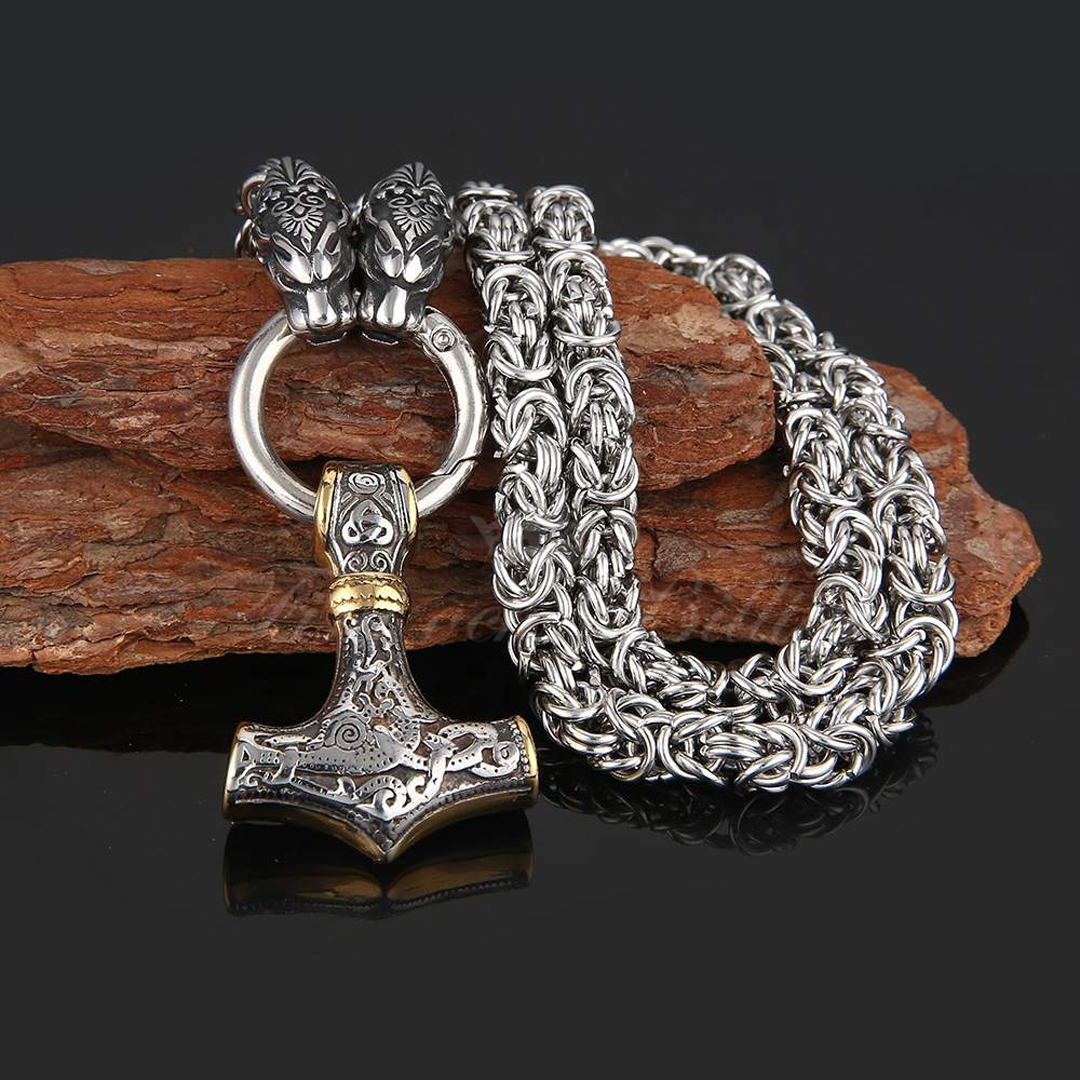
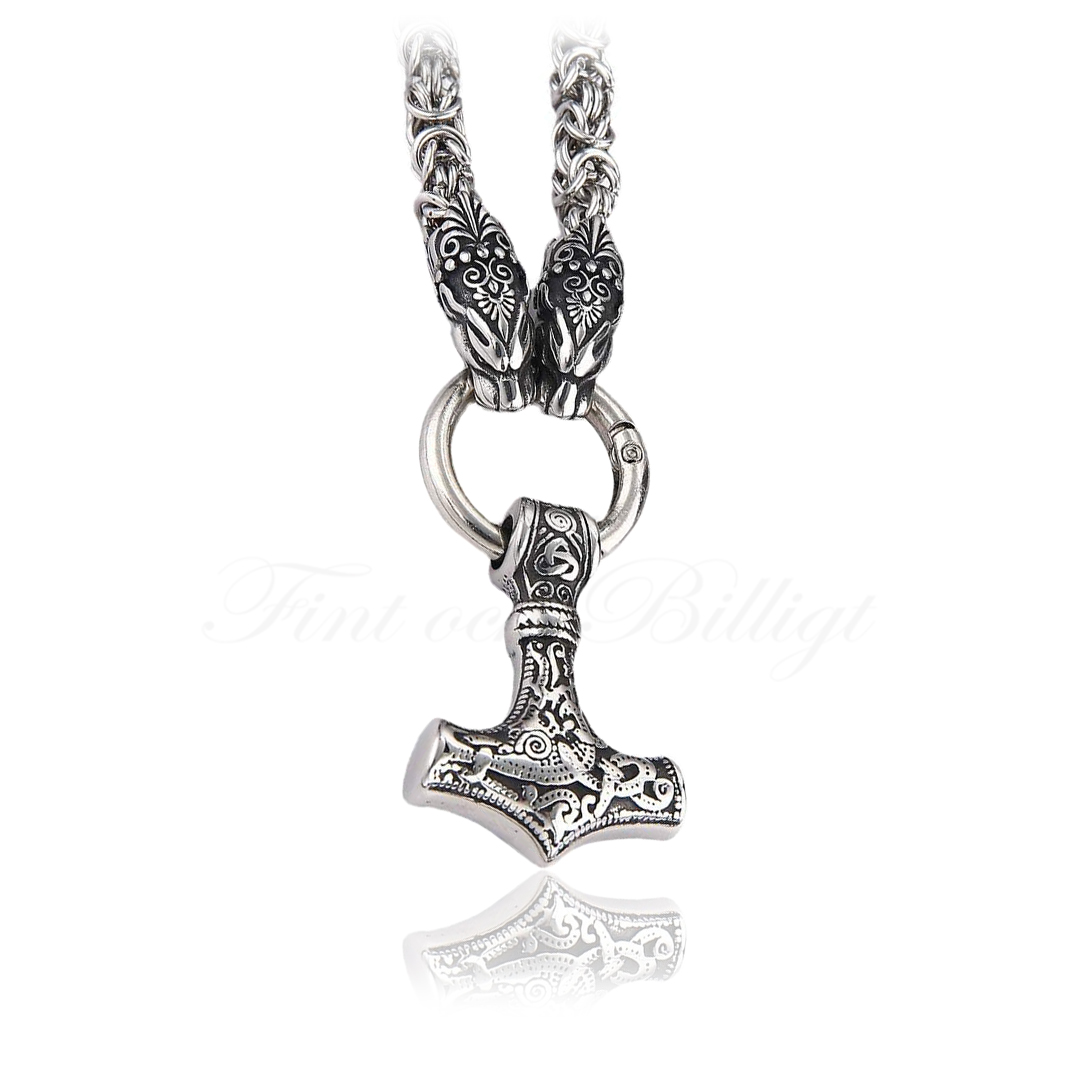
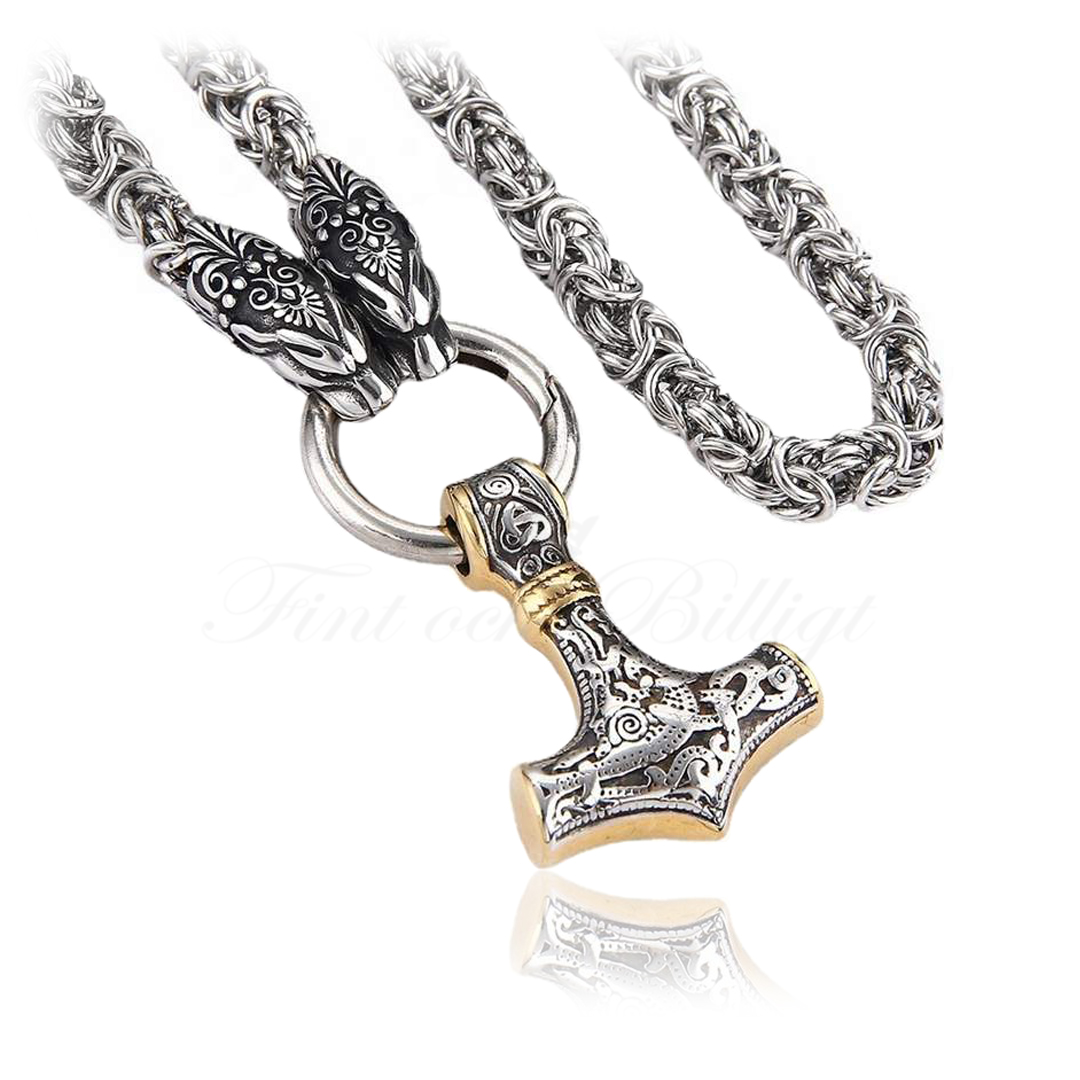
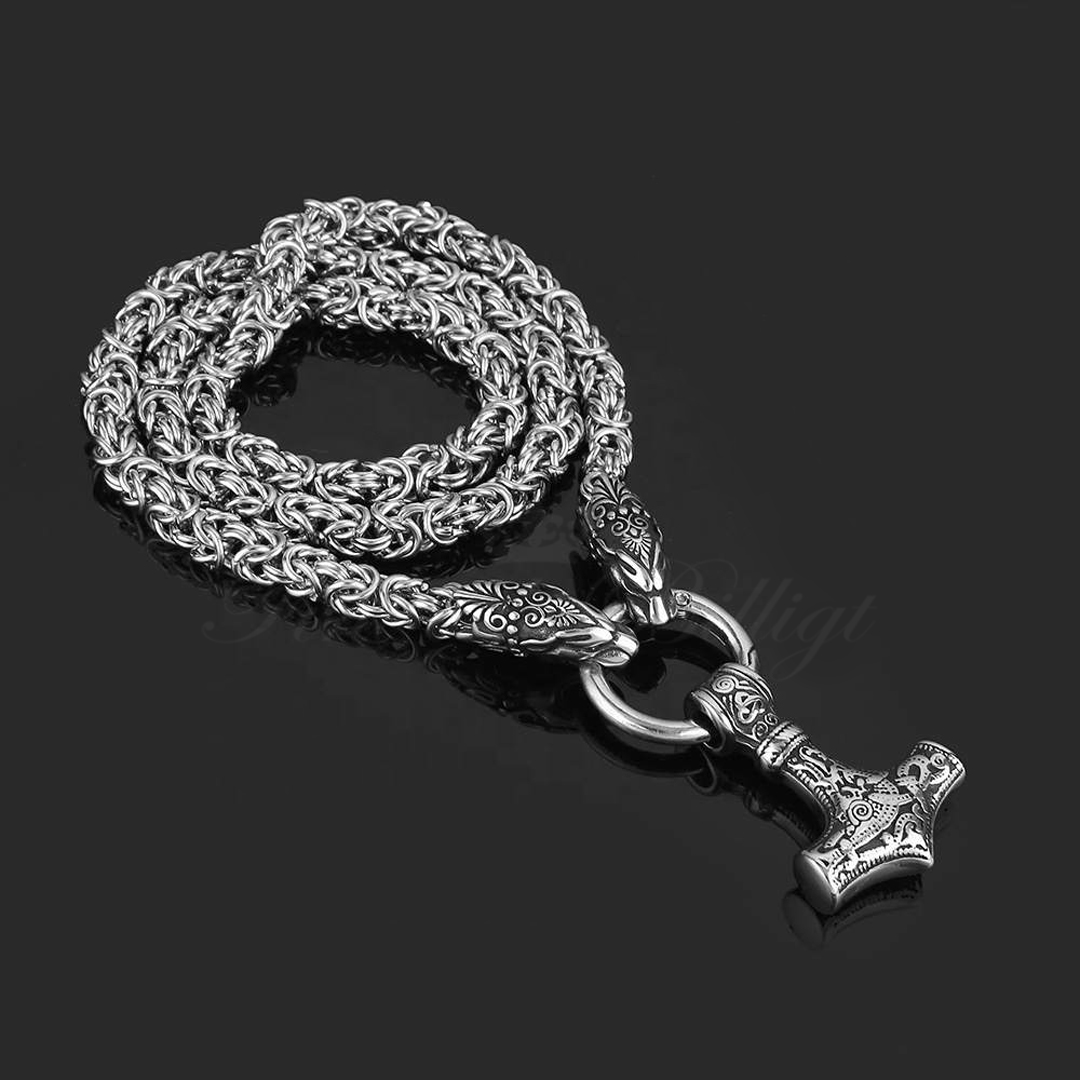
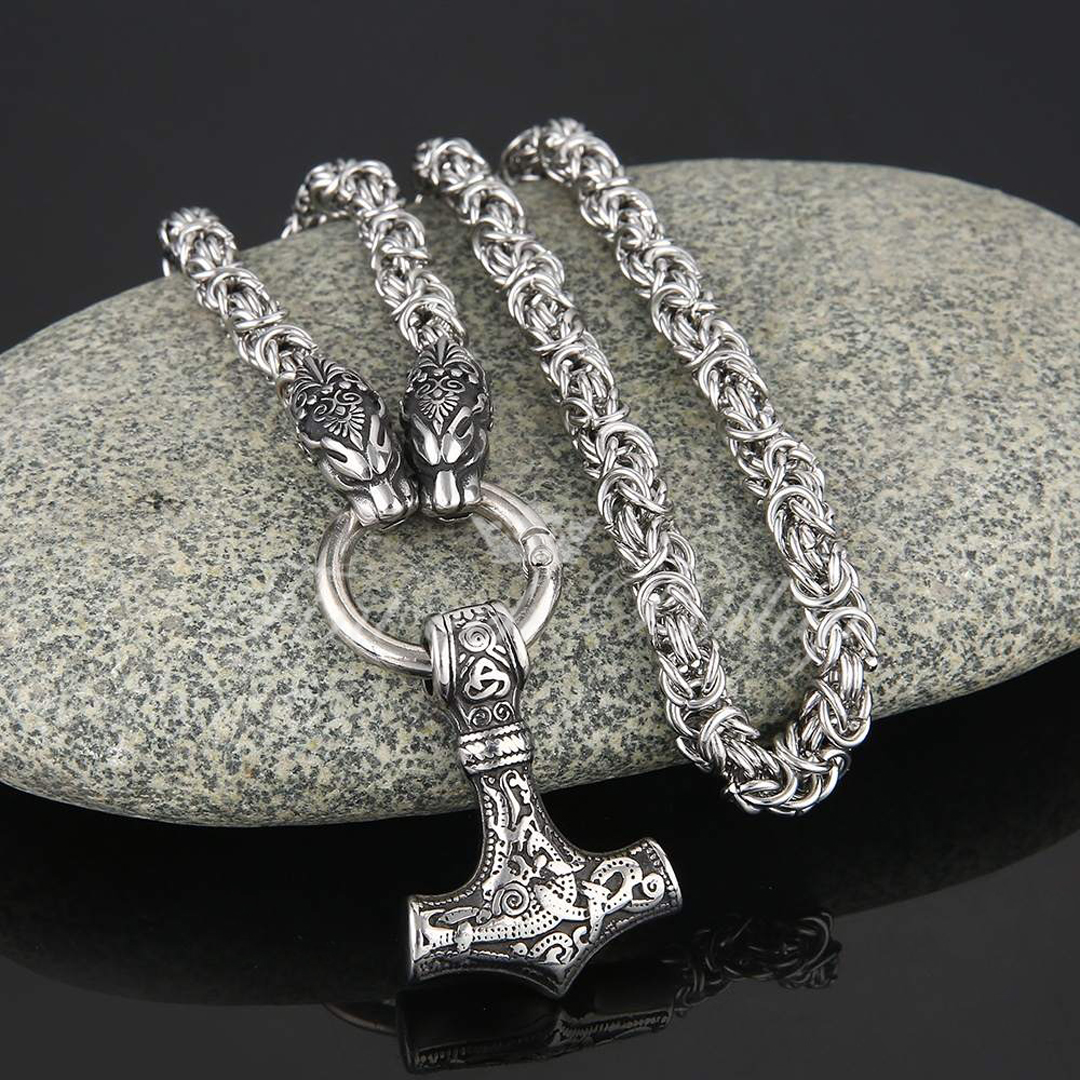
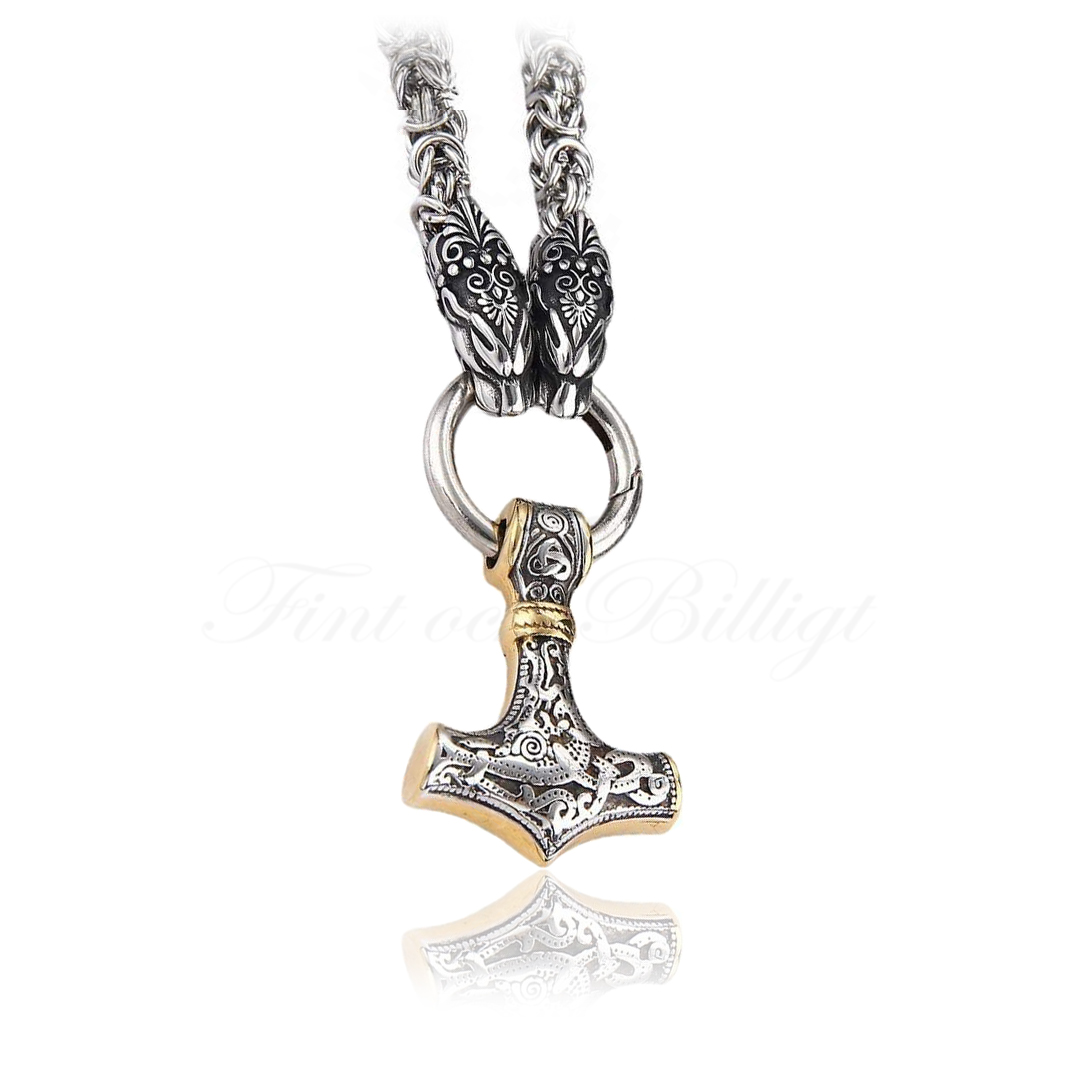
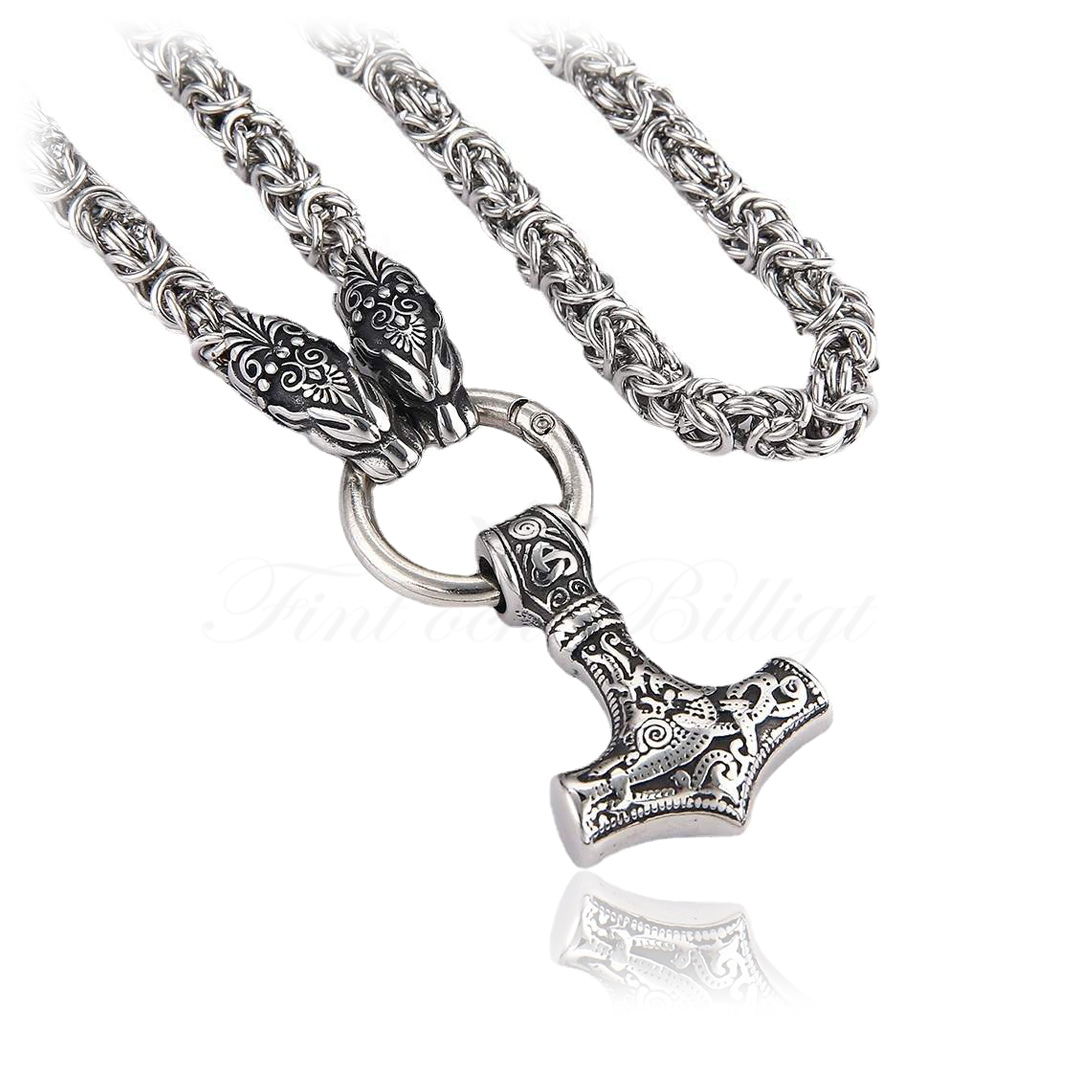
Giant Jormungandr King Steel - Viking Necklace Thor's Hammer King's Chain (Multiple choices)
 ✅ Pay after delivery. Safe and secure with Svea.
 Secure payment by card
 Paypal Secure and Fast payment
Unleash your Viking spirit – order today!
Why choose Giant Jormungandr King Steel?
- Iconic Thor’s Hammer (Mjolnir)
- Heavy king´s braid chain
- Bold and masculine Viking design
- Made from premium stainless steel
- Scratch-resistant & durable
- Nickel-free and skin-friendly
- Perfect as a statement piece or gift
- Designed for everyday wear
Giant Jormungandr King Steel – Viking Necklace with Thor’s Hammer
Wear pure Norse strength with Giant Jormungandr King Steel. This bold Viking necklace combines Thor’s Hammer (Mjölnir) with a heavy king chain, crafted from durable stainless steel for a commanding and timeless look.
Viking jewelery perfect as a present or Christmas present. Excellent gift ideas for birthdays, Father's Day or other holidays.Description
Article no.: HBS045
Model: Giant Jormungandr King Steel - Viking pendant
Material: 316L surgical steel
Color: Silver, Silver/Gold
Link: Kungslänk
Surface: Rustic, Glossy
Pendant size: WxH 31mm x 44mm
Chain size: Length: 50cm, 60cm or 70cm, Width: 7mm
Weight: approx. 155g - 180g
Giant Jormungandr King Steel is an exclusive handmade Viking necklace with Thor's hammer & King's chain with the Midgard serpent Jormungandr holding Thor's hammer.
King's chain was worn by kings during the Viking Age, hence the name King's chain.
Made of the highest quality stainless steel with gold plating.
A unique necklace in surgical steel with very fine details and incredibly well-made craftsmanship.
Choose from several different lengths.
Made of surgical steel and is nickel-free
King's Braid Chain - The king's chain is a classic chain that has existed for approximately 6000 years, it was very common in the Viking age and is also called Chain of fools or Byzantine chain.
Chain of fools or King's braid chain was worn by kings during the Viking Age and hence got the name King´s chain.
In English it is called "Chain of fools"
King's chain or emperor's chain is a type of chain that is made up of circular metal rings. The technique produces a heavy and compact chain that is widely used in jewelry manufacturing.
Midgårdsormen, Miðgarðsormr in Old Norse (the world serpent) or Jörmungandr, Jǫrmungandr in Old Norse (the mighty staff), is a being from Norse mythology.
It belongs to the giant family and is bred by Loki and Angerboda.
The Midgard Serpent is the sibling of Hel, the Fenriswolf, Narfe and Sleipner.
It is also called Jörmungandr, (Earth's band).
The name Midgårdsormen appears only in Snorre Sturlasson's Snorre's Edda.
In the Poetic Edda and in the skald poem it is called Jörmungandr, Ormr, Nádr (snake, dragon). The serpent lay in the world sea after being thrown there by Odin. Odin had let Loki's children live in Asgard, but when the Midgard Serpent became much too big, Odin had to get rid of it. The Midgard Serpent was so long that it could coil itself around Midgard and bite its own tail.
The Serpent of Midgard met the thunder god Thor three times. The first time was when Tor, Loki and Tjalve visited Utgård. Then Thor had to lift one of the giants' cats, while the giant Utgårda-Loke distorted his vision. The cat was in fact the Midgard Serpent and it became alarming when he managed to lift one of its legs. After this, however, Tor had to see himself defeated and had to receive mirrors for his low strength, until he learned that he had been exposed to sorcery.
The second time Thor rowed out to sea to fish in the company of the giant Hymer. Thor had then baited with the head of Hymer's biggest bull. The Midgard Serpent snapped and its head appeared above the surface of the water. Thor grabbed his hammer Mjölner and struck the snake in the head with all his might. The terrified Hymer then cut the meter rope and the snake sank into the sea.
This is how the episode is described in the poem Kvædet om Hymer. This scene is reproduced on three picture stones from the Viking Age, including the stone at Altuna church.
The third encounter takes place at the final battle of Ragnarök. Thor kills the Serpent of Midgard but doesn't have time to go more than nine steps before he dies, poisoned by etter.
According to myth, the Midgard Serpent was the child of Loki and a giantess named Angerboda. The Fenriswolf and Hel were the beast's siblings. After the conversion to Christianity, the Mediterranean Serpent was associated with the Leviathan of the Old Testament.
Material: 316L surgical steel
Color: Silver, Silver/Gold
Link: Kungslänk
Surface: Rustic, Glossy
Pendant size: WxH 31mm x 44mm
Chain size: Length: 50cm, 60cm or 70cm, Width: 7mm
Weight: approx. 155g - 180g
Thor’s Hammer – a symbol of power and protection
Thor’s Hammer has long symbolized strength, protection and honor. Paired with a solid king chain, this necklace delivers a strong masculine presence inspired by Viking heritage.
Built to last with high-quality stainless steel.
Giant Jormungandr King Steel is a Viking necklace for those who value strength, symbolism and bold design. The combination of Thor’s Hammer and the king´s chain creates a powerful piece rooted in Norse mythology and modern craftsmanship.Giant Jormungandr King Steel is an exclusive handmade Viking necklace with Thor's hammer & King's chain with the Midgard serpent Jormungandr holding Thor's hammer.
King's chain was worn by kings during the Viking Age, hence the name King's chain.
Made of the highest quality stainless steel with gold plating.
A unique necklace in surgical steel with very fine details and incredibly well-made craftsmanship.
Choose from several different lengths.
Made of surgical steel and is nickel-free
King's Braid Chain - The king's chain is a classic chain that has existed for approximately 6000 years, it was very common in the Viking age and is also called Chain of fools or Byzantine chain.
Chain of fools or King's braid chain was worn by kings during the Viking Age and hence got the name King´s chain.
In English it is called "Chain of fools"
King's chain or emperor's chain is a type of chain that is made up of circular metal rings. The technique produces a heavy and compact chain that is widely used in jewelry manufacturing.
Midgårdsormen, Miðgarðsormr in Old Norse (the world serpent) or Jörmungandr, Jǫrmungandr in Old Norse (the mighty staff), is a being from Norse mythology.
It belongs to the giant family and is bred by Loki and Angerboda.
The Midgard Serpent is the sibling of Hel, the Fenriswolf, Narfe and Sleipner.
It is also called Jörmungandr, (Earth's band).
The name Midgårdsormen appears only in Snorre Sturlasson's Snorre's Edda.
In the Poetic Edda and in the skald poem it is called Jörmungandr, Ormr, Nádr (snake, dragon). The serpent lay in the world sea after being thrown there by Odin. Odin had let Loki's children live in Asgard, but when the Midgard Serpent became much too big, Odin had to get rid of it. The Midgard Serpent was so long that it could coil itself around Midgard and bite its own tail.
The Serpent of Midgard met the thunder god Thor three times. The first time was when Tor, Loki and Tjalve visited Utgård. Then Thor had to lift one of the giants' cats, while the giant Utgårda-Loke distorted his vision. The cat was in fact the Midgard Serpent and it became alarming when he managed to lift one of its legs. After this, however, Tor had to see himself defeated and had to receive mirrors for his low strength, until he learned that he had been exposed to sorcery.
The second time Thor rowed out to sea to fish in the company of the giant Hymer. Thor had then baited with the head of Hymer's biggest bull. The Midgard Serpent snapped and its head appeared above the surface of the water. Thor grabbed his hammer Mjölner and struck the snake in the head with all his might. The terrified Hymer then cut the meter rope and the snake sank into the sea.
This is how the episode is described in the poem Kvædet om Hymer. This scene is reproduced on three picture stones from the Viking Age, including the stone at Altuna church.
The third encounter takes place at the final battle of Ragnarök. Thor kills the Serpent of Midgard but doesn't have time to go more than nine steps before he dies, poisoned by etter.
According to myth, the Midgard Serpent was the child of Loki and a giantess named Angerboda. The Fenriswolf and Hel were the beast's siblings. After the conversion to Christianity, the Mediterranean Serpent was associated with the Leviathan of the Old Testament.
- BrandFint och Billigt
- ColorSilver
- ConditionNew
- Material316L Stainless Steel
- Suggested age groupAdult (typically teens or older)
- Suggested genderMale