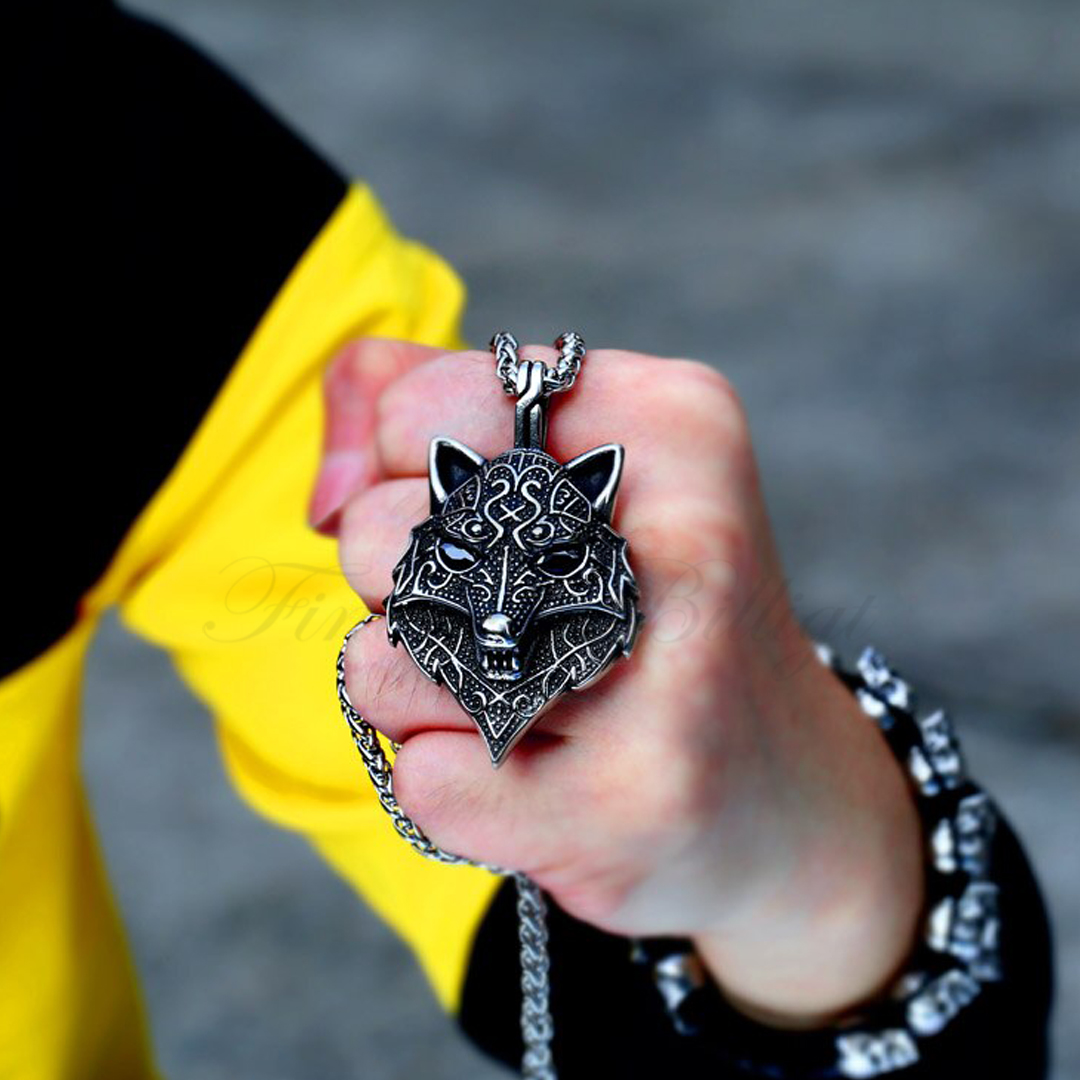
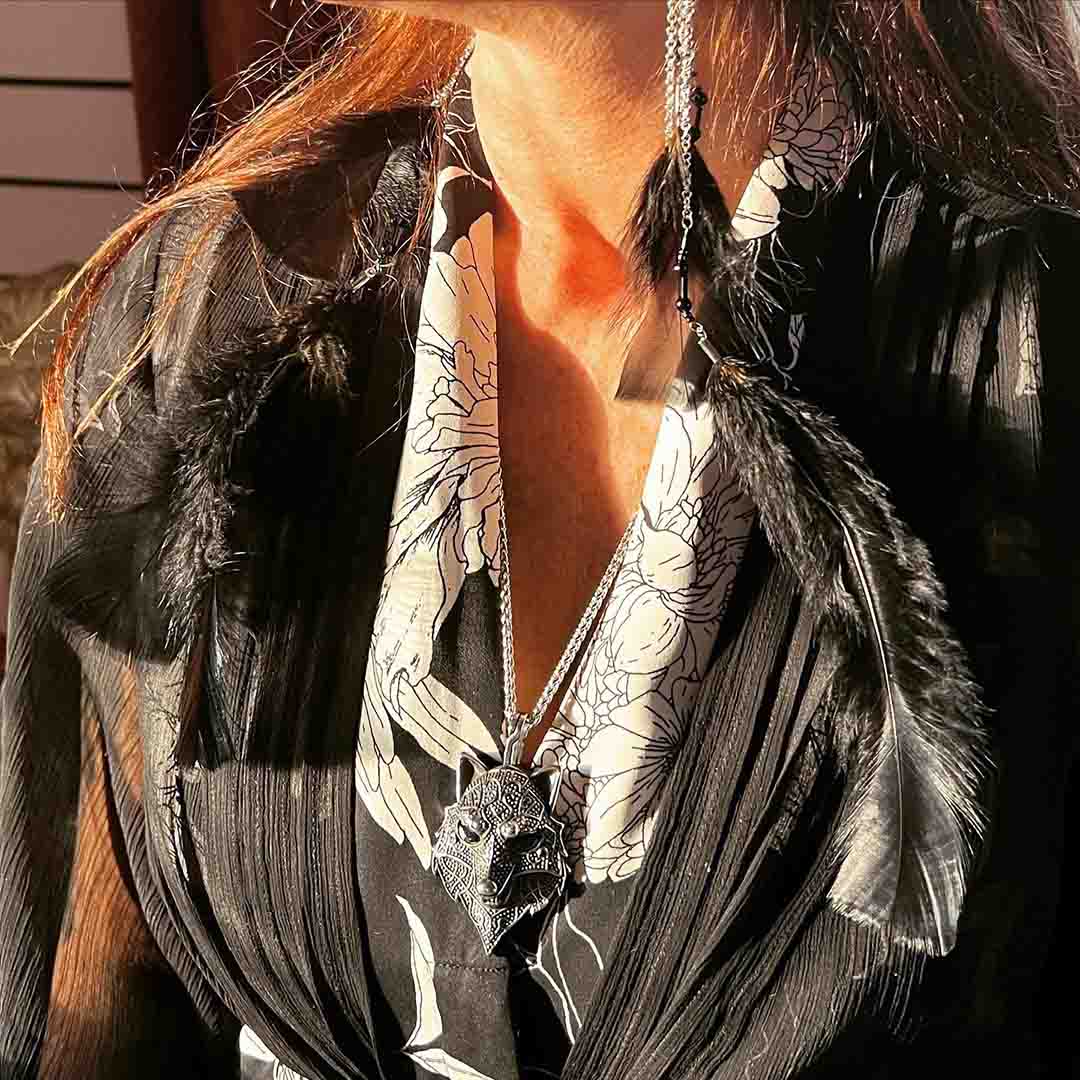
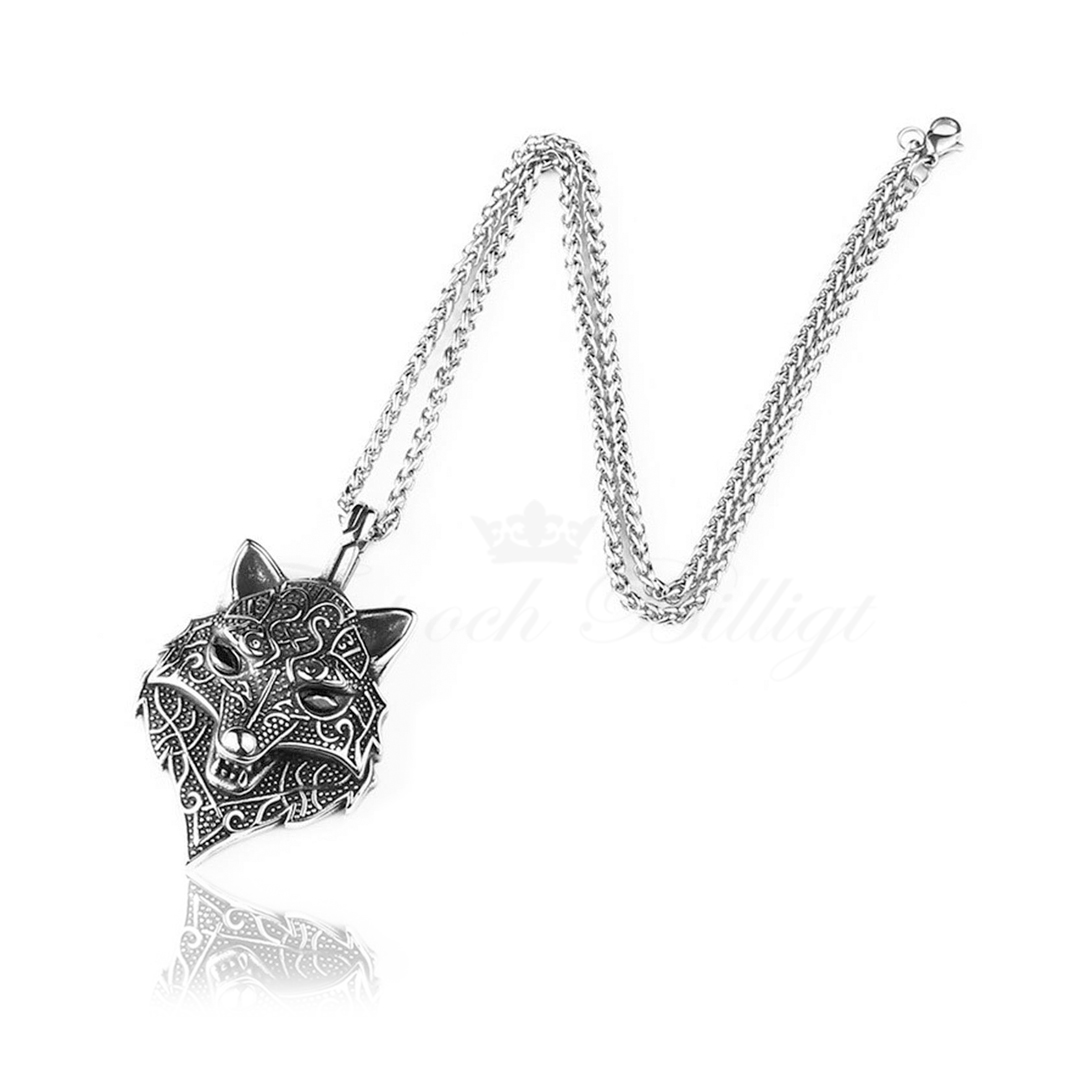
Howling Fenrir Necklace - Wolf Head Black Stones Viking Pendant (Multiple choices)
 ✅ Pay after delivery. Safe and secure with Svea.
 Secure payment by card
 Paypal Secure and Fast payment
Order Howling Fenrir today and wear the power of the wolf
Why choose Howling FenrirFenrir symbolizes untamed power and independence. This necklace is made for those who want a strong statement piece with deep mythological meaning.
Benefits:
- Fenrir wolf from Norse mythology
- Aggressive and detailed wolf head design
- Black stones for a bold, dark aesthetic
- Suitable for everyday wear or statement looks
- Ideal as a gift or personal talisman
Howling Fenrir – Viking Necklace with Wolf Head
Howling Fenrir is a bold Viking necklace inspired by Fenrir, the legendary wolf of Norse mythology. Featuring a detailed wolf head and black stones, this pendant delivers a dark, powerful, and exclusive look.Description
Article no.: HBS039
Model: Howling Fenrir - Wolf Pendant
Material: 304L stainless steel
Color: Silver, Black
Link: Spiga link, Spiga chain
Surface: Rustic, Glossy and matt
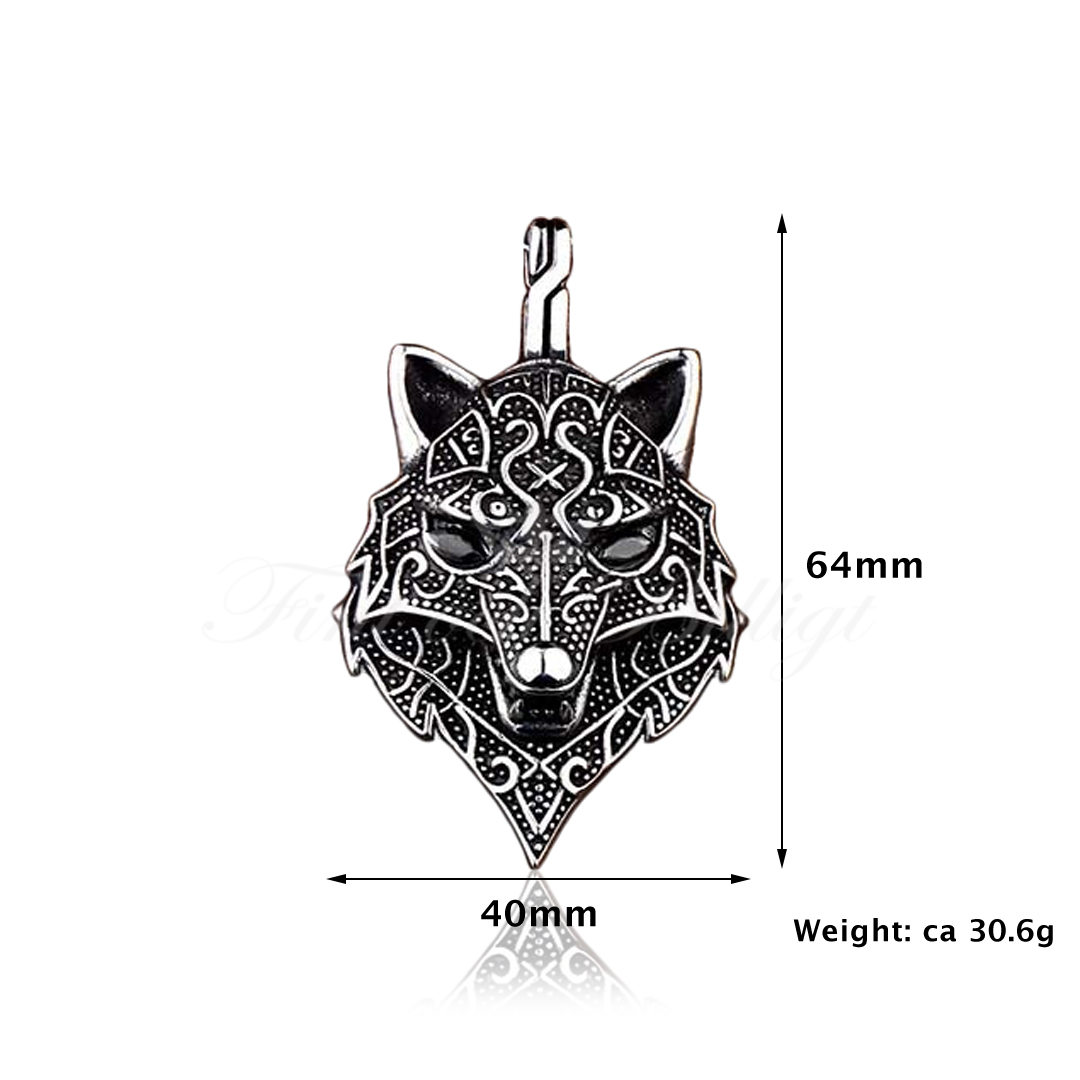
Pendant size: WxH 40mm x 64mm
Chain size: 4 mm
Chain length: 50cm, 60cm and 70cm
Weight: approx. 31g
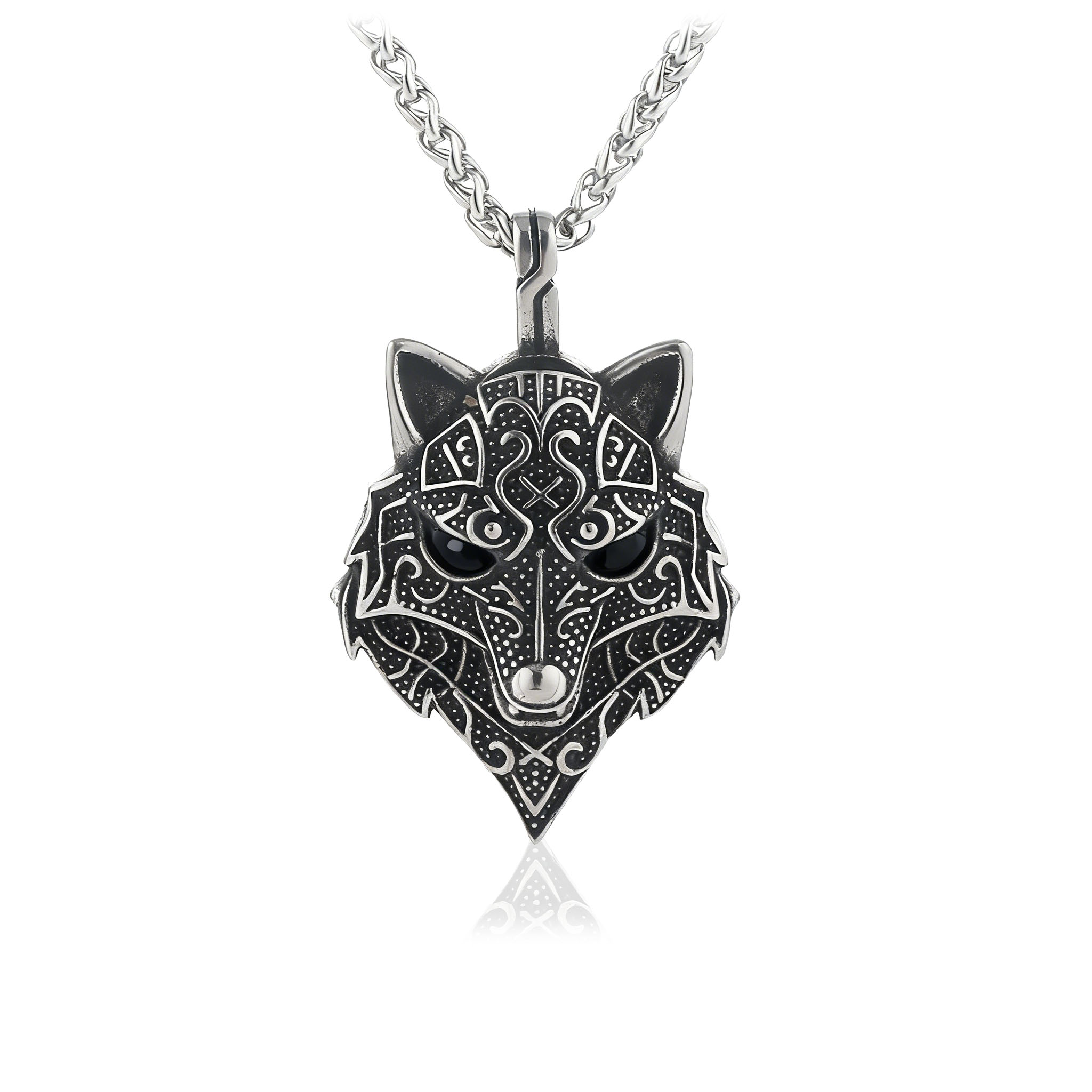
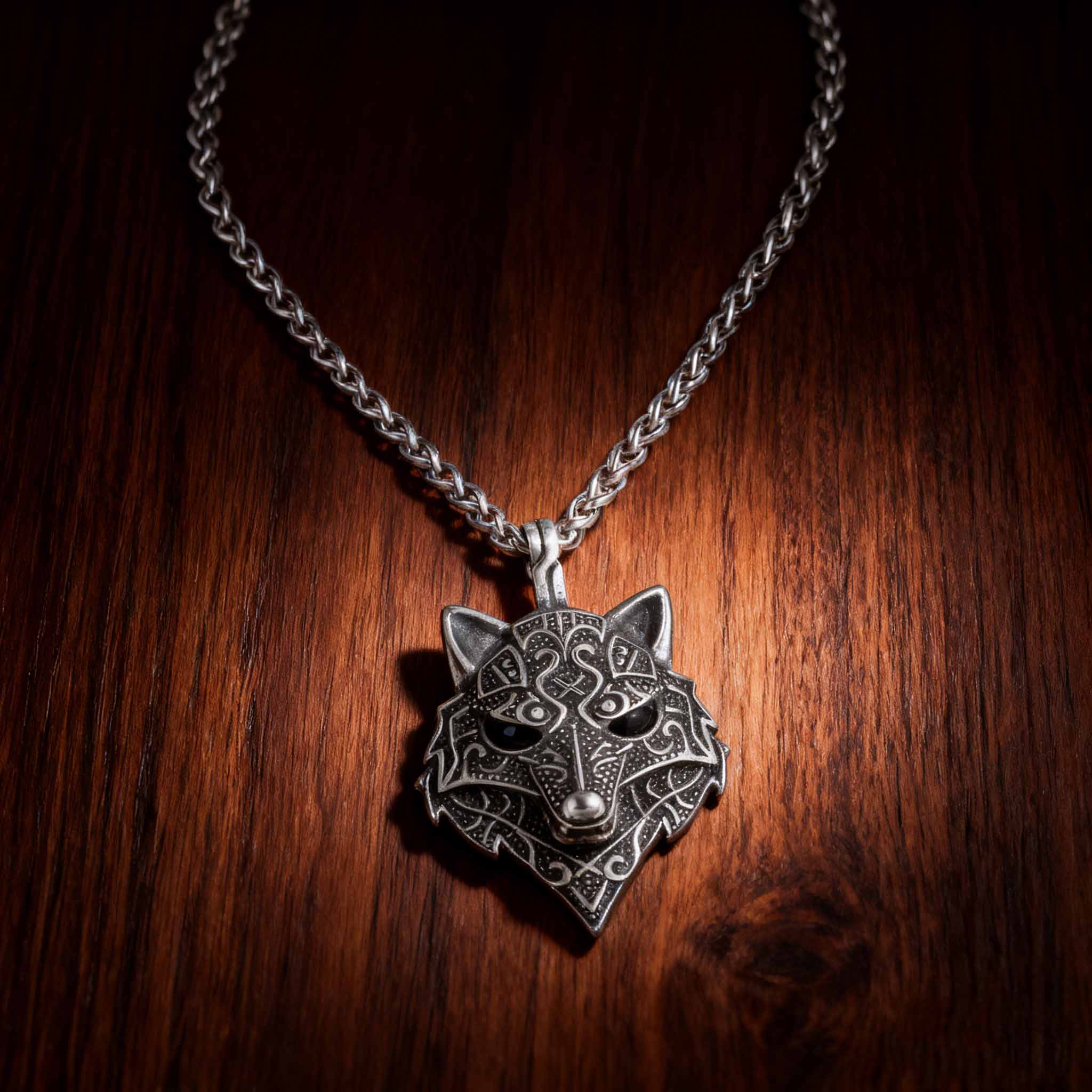
Howling Fenrir is a handmade Viking necklace with Fenrir's wolf (wolf head), with sparkling black stones as eyes.
A unique necklace in surgical steel with very fine details and incredibly well-made craftsmanship.
Perfect as a present or Christmas present. Excellent gift ideas for Father's Day or other holidays.
Fenrir, roughly translated, means "the one who hides in the mire".
Fenrir is an evil being in wolf form in Old Norse mythology. It is also called Fenrisulven (the marsh wolf), Hróðvitnir (the spoken one) and Vanagandr (the beast of the river Ván).
Fenrir is mentioned in the poetic Edda and the information is brought together in the 13th century in Snorre's Edda and Heimskringla (Norse Kings' Tales).
Fenrir is the father of the wolves Skǫll and Hati. The poem Völuspá tells about the descendants of Fenrir who were raised in the Iron Forest and who appear during Ragnarök. There, among other things, it is described that Fenris himself attacks Odin and kills him, "Now Frigg is struck by grief again when Odin goes to fight the wolf".
In Vafthrudni's wisdom contest, Odin asks the wise giant Vafthrudnir the following question:
Will we get new sunshine in the smooth sky when the Wolf has swallowed our sun?
The giant answers that the Sun has time to give birth to a daughter who will continue in her path.
In Snorre's Edda, in the section called Gylfaginning "How Gylfe was deceived", Fenrir is mentioned in connection with the god Tyr. The gods feared the wolf, which grew bigger and stronger every day. They wanted to imprison him with the magic chain Gleipne, but the wolf refused.
He didn't trust them, but if Tyr would put his hand in his mouth, they would put the prison around his neck. When Fenrir didn't break free, he bit off Tyr's arm.
Fenris was imprisoned at a cairn called Gjöll. To prevent him from biting, the gods thrust a sword into his mouth. Here he awaited Ragnarök and howled terribly. Dregel flowed from his jaws and formed the river Vån. Then one of the gods says that all the warriors in Valhalla will not be enough when the wolf comes.
In a prediction of the events at Ragnarök, it is said that Fenrir's son Skǫll will swallow the sun. The earth shakes so that Fenrir comes loose and goes around with his mouth agape, his lower jaw on the ground and his upper jaw up in the sky. Both eyes and nostrils shoot fire.
Fenrir meets Odin and devours him. Odin's son Vidar puts his foot on the wolf's jaw and lifts his upper jaw, which is torn apart, ending Fenrir.
Material: 304L stainless steel
Color: Silver, Black
Link: Spiga link, Spiga chain
Surface: Rustic, Glossy and matt
Pendant size: WxH 40mm x 64mm
Chain size: 4 mm
Chain length: 50cm, 60cm and 70cm
Weight: approx. 31g
Viking Necklace with Fenrir – Wolf Head & Black Stones
The Howling Fenrir Viking Necklace blends ancient Norse mythology with modern design. This powerful wolf head pendant is a symbol of raw strength and fearless individuality, built to stand out and endure.Design, symbolism & materials
Crafted from durable allergy safe stainless steel with detailed craftsmanship. The black stones enhance the mystical feel, while the wolf head represents strength, courage, and freedom.Howling Fenrir is a handmade Viking necklace with Fenrir's wolf (wolf head), with sparkling black stones as eyes.
A unique necklace in surgical steel with very fine details and incredibly well-made craftsmanship.
Perfect as a present or Christmas present. Excellent gift ideas for Father's Day or other holidays.
Fenrir, roughly translated, means "the one who hides in the mire".
Fenrir is an evil being in wolf form in Old Norse mythology. It is also called Fenrisulven (the marsh wolf), Hróðvitnir (the spoken one) and Vanagandr (the beast of the river Ván).
Fenrir is mentioned in the poetic Edda and the information is brought together in the 13th century in Snorre's Edda and Heimskringla (Norse Kings' Tales).
Fenrir is the father of the wolves Skǫll and Hati. The poem Völuspá tells about the descendants of Fenrir who were raised in the Iron Forest and who appear during Ragnarök. There, among other things, it is described that Fenris himself attacks Odin and kills him, "Now Frigg is struck by grief again when Odin goes to fight the wolf".
In Vafthrudni's wisdom contest, Odin asks the wise giant Vafthrudnir the following question:
Will we get new sunshine in the smooth sky when the Wolf has swallowed our sun?
The giant answers that the Sun has time to give birth to a daughter who will continue in her path.
In Snorre's Edda, in the section called Gylfaginning "How Gylfe was deceived", Fenrir is mentioned in connection with the god Tyr. The gods feared the wolf, which grew bigger and stronger every day. They wanted to imprison him with the magic chain Gleipne, but the wolf refused.
He didn't trust them, but if Tyr would put his hand in his mouth, they would put the prison around his neck. When Fenrir didn't break free, he bit off Tyr's arm.
Fenris was imprisoned at a cairn called Gjöll. To prevent him from biting, the gods thrust a sword into his mouth. Here he awaited Ragnarök and howled terribly. Dregel flowed from his jaws and formed the river Vån. Then one of the gods says that all the warriors in Valhalla will not be enough when the wolf comes.
In a prediction of the events at Ragnarök, it is said that Fenrir's son Skǫll will swallow the sun. The earth shakes so that Fenrir comes loose and goes around with his mouth agape, his lower jaw on the ground and his upper jaw up in the sky. Both eyes and nostrils shoot fire.
Fenrir meets Odin and devours him. Odin's son Vidar puts his foot on the wolf's jaw and lifts his upper jaw, which is torn apart, ending Fenrir.
- BrandFint och Billigt
- ColorSilver
- ConditionNew
- MaterialStainless Steel
- Suggested age groupAdult (typically teens or older)
- Suggested genderMale