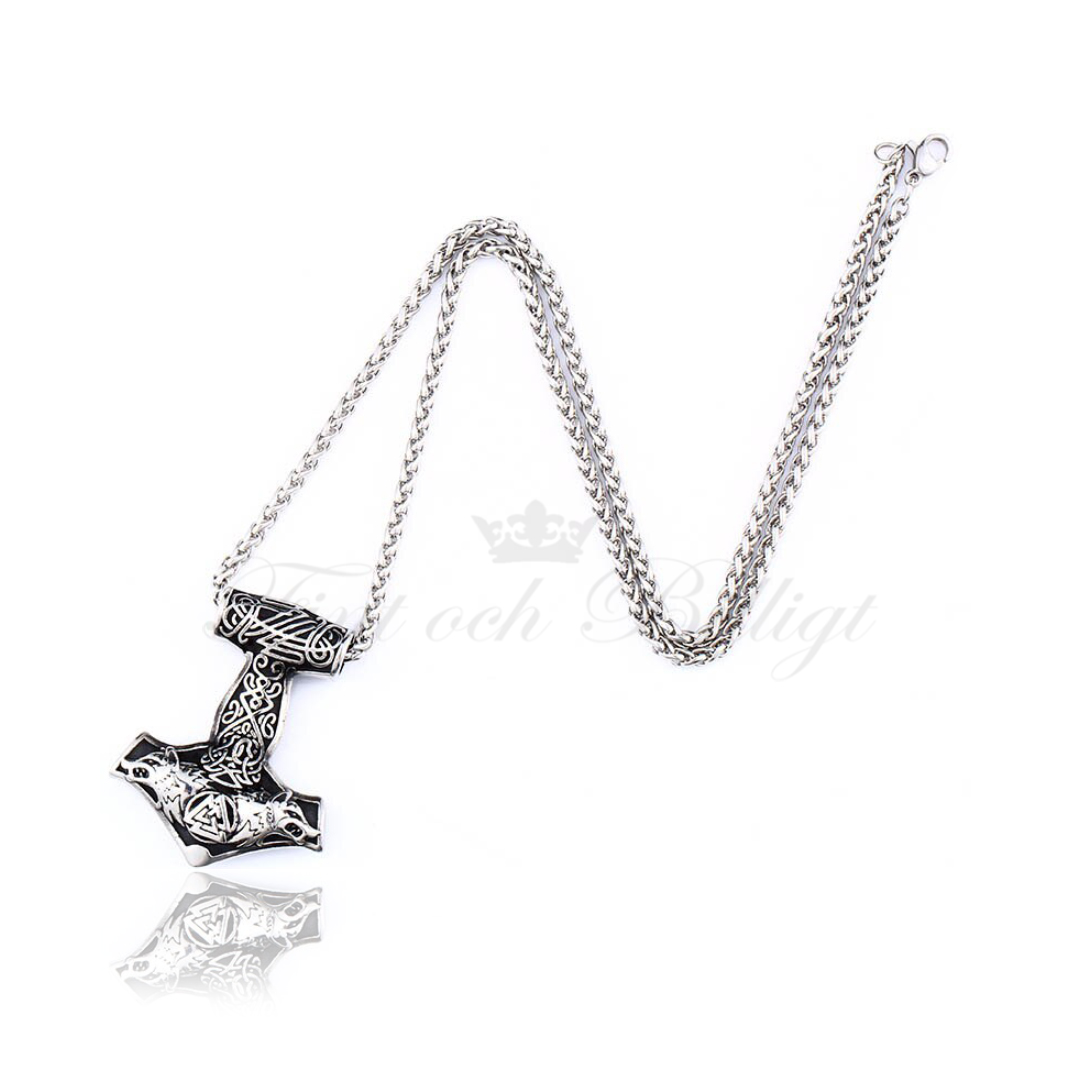
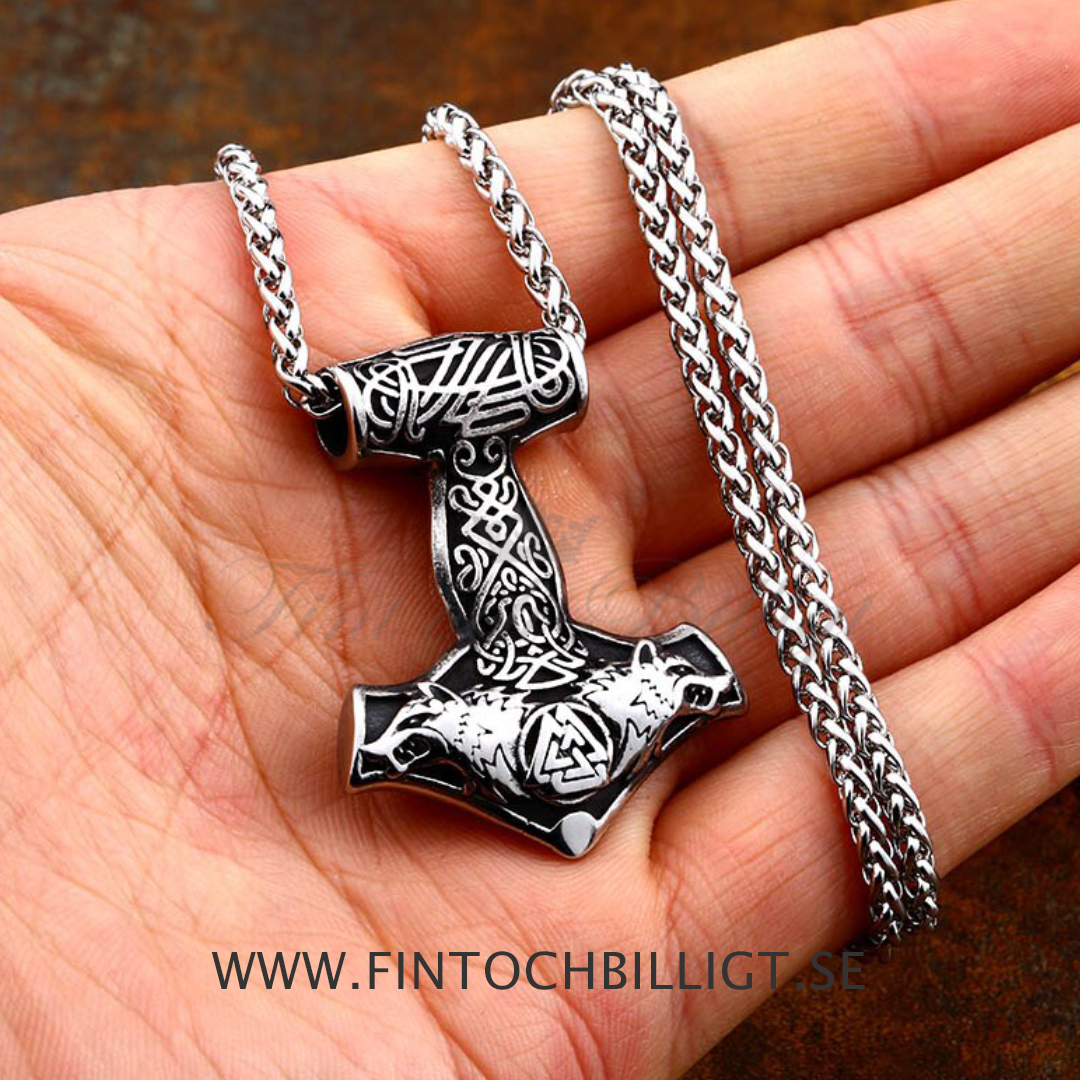
Necklace Valknut Wolfhead - Viking Necklace Thor's Hammer Runes
 ✅ Pay after delivery. Safe and secure with Svea.
 Secure payment by card
 Paypal Secure and Fast payment
Order your personal - Valknut Wolfhead Pendant - viking necklace today.
• Viking necklace
• Thor's Hammer Mjölnir
• Valknut and Wolf Heads
• Price guarantee
• Always the highest quality
• Fast delivery
• Professional and fast customer support
• Nickel-free (surgical steel)
• Warranty
• Extremely durable
• much appreciated gift
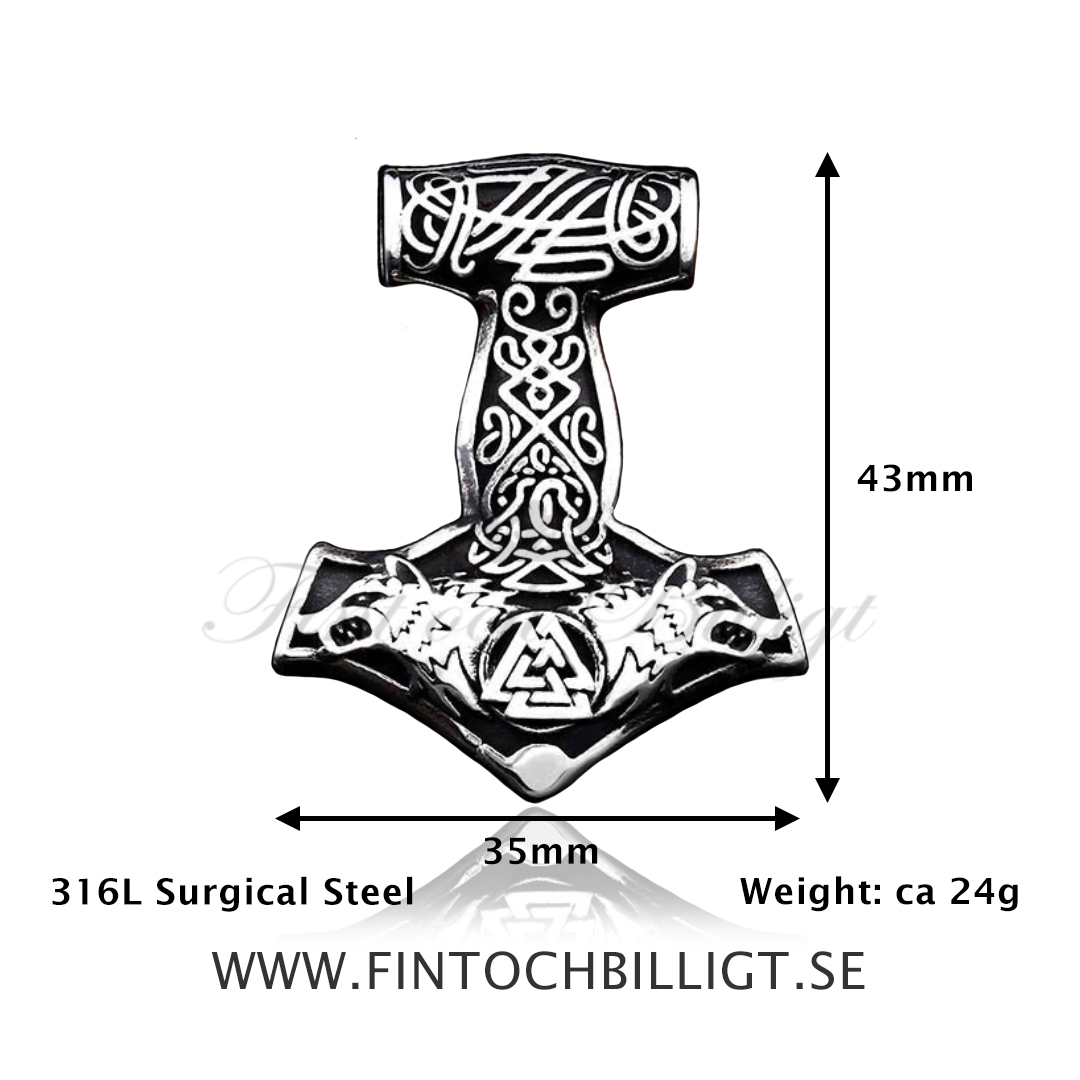
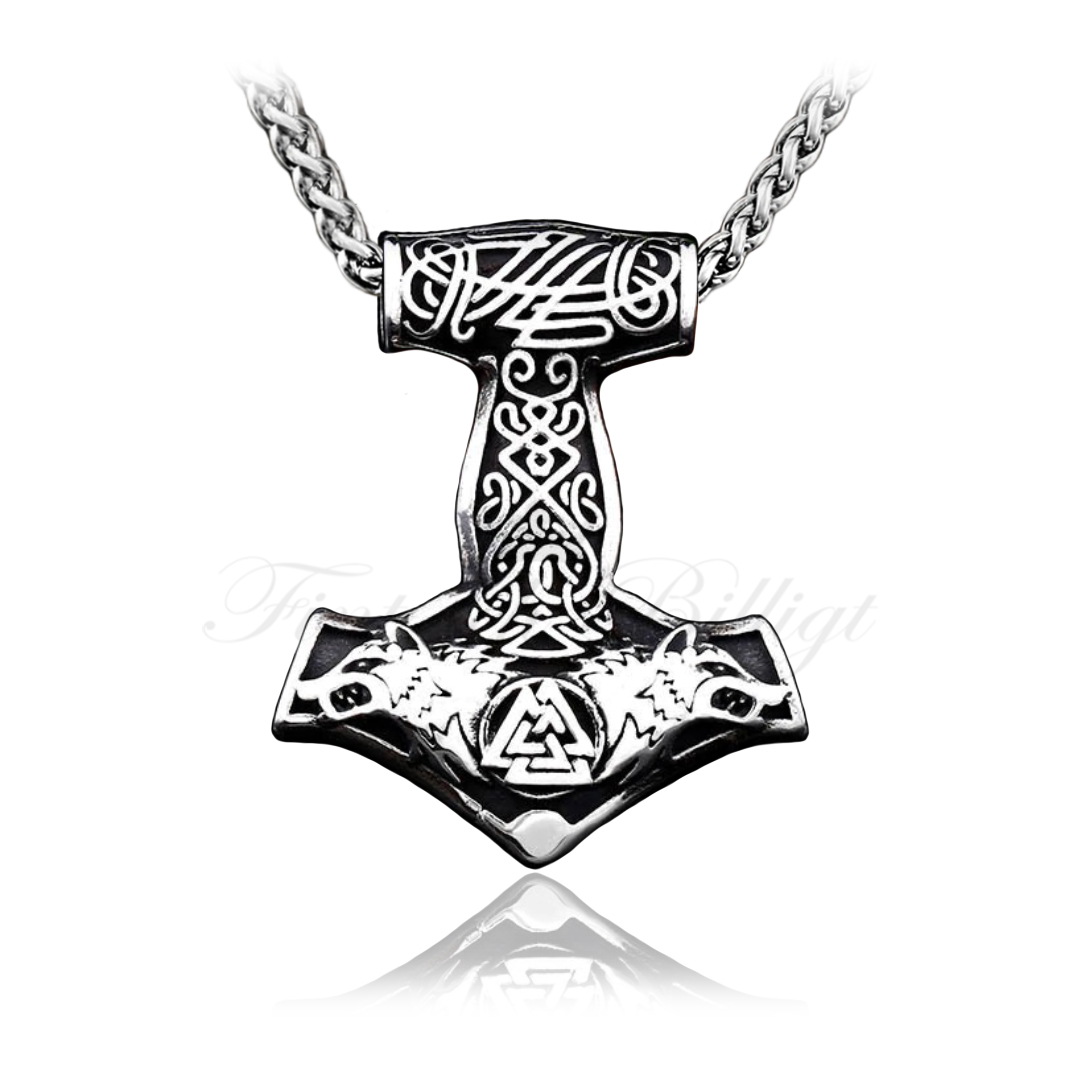
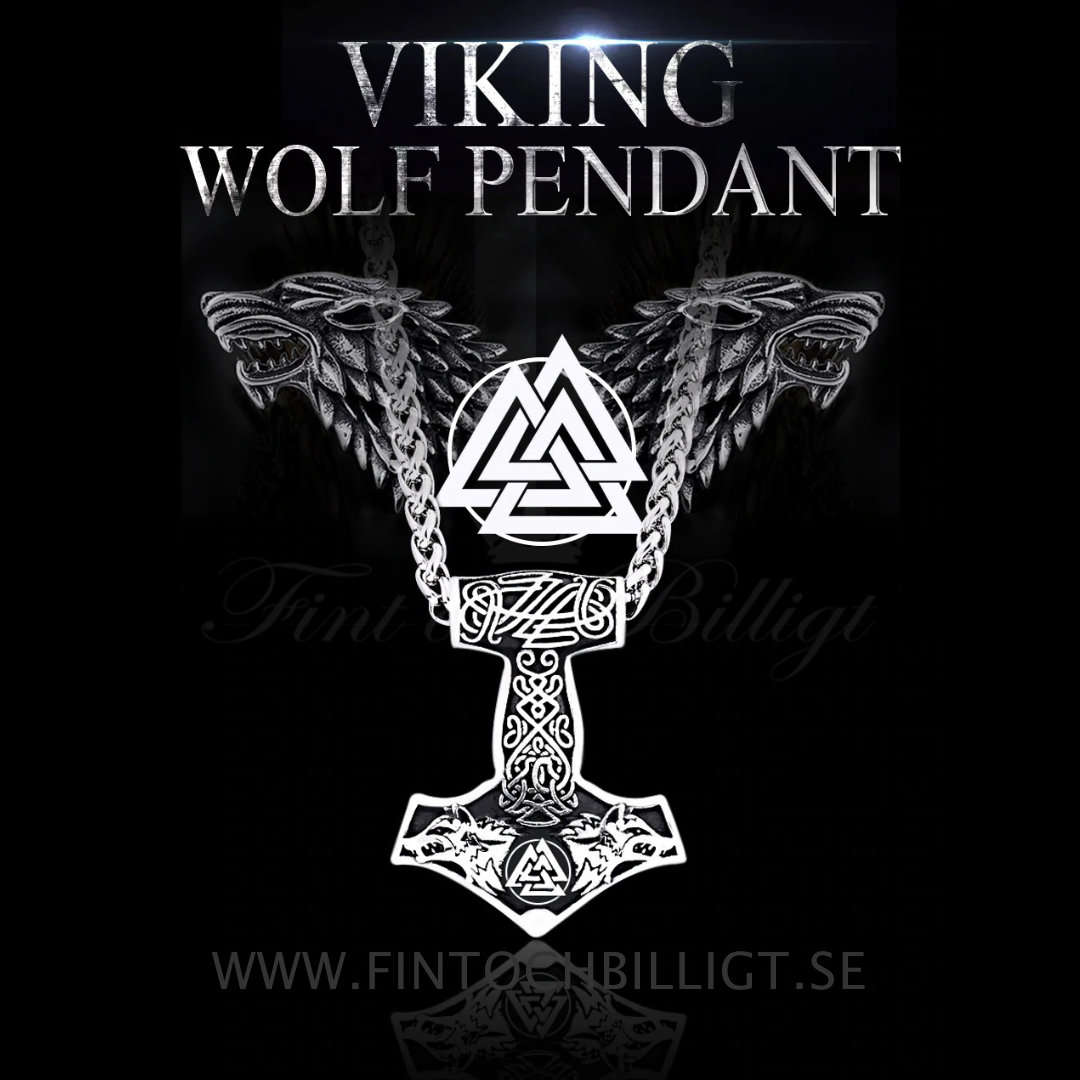
Valknut Wolfhead is a handmade viking necklace in solid steel with Thor's hammer Mjölner adorned with the valknut surrounded by wolf heads on each side as well as runes and Viking symbols.
A unique necklace in surgical steel with very fine details and incredibly well-made craftsmanship.
Choose from several different lengths.
Made in 316L and is nickel-free.
Perfect as a present or Christmas present. Excellent gift ideas for Mother's Day, Father's Day or other holidays.
Viking necklace perfect as a present or Christmas present. Excellent gift ideas for Mother's Day, Father's Day or other holidays.
• Viking necklace
• Thor's Hammer Mjölnir
• Valknut and Wolf Heads
• Price guarantee
• Always the highest quality
• Fast delivery
• Professional and fast customer support
• Nickel-free (surgical steel)
• Warranty
• Extremely durable
• much appreciated gift
Valknut Wolfhead is a handmade viking necklace in solid steel with Thor's hammer Mjölner adorned with the valknut surrounded by wolf heads on each side as well as runes and Viking symbols.
A unique necklace in surgical steel with very fine details and incredibly well-made craftsmanship.
Choose from several different lengths.
Made in 316L and is nickel-free.
Perfect as a present or Christmas present. Excellent gift ideas for Mother's Day, Father's Day or other holidays.
Viking necklace perfect as a present or Christmas present. Excellent gift ideas for Mother's Day, Father's Day or other holidays.
Description
Article no.: HBS032
Model: Valknut Wolfhead Pendant
Material: 316L surgical steel
Color: Silver, Black
Link: Spiga link, Spiga chain
Surface: Rustic, Glossy and matt
Pendant size: WxH 35mm x 43mm Thickness: 10mm
Chain size: Length: 600mm Width: 3mm
Weight: approx. 40g
Category: Unisex
Valknut Wolfhead is a necklace with Torshammer and the famous Valknut.
Made of surgical steel and is nickel-free
Mjölnir is forged by the dwarves Sindre and Brokk after a bet with Loki who once again lost himself among the great Asa gods and cut off Thor's wife Siv's hair. When he meets the brothers, he makes a bet with them in which the brothers will make three gifts to the three gods he has been punished by. He himself will also arrange three gifts and if the gods choose Sindre and Brokk's gifts, the brothers will receive his head.
However, there will be a manufacturing error and the hammer's shaft will be too short. But despite the error, the gods (Oden, Thor and Frej) choose Sindre and Brook's gifts. When it is time for the brothers to receive the payment in the form of Loki's head, Loki tricks them by saying: "The wager was for my head, but only my head and not my neck. That way my neck must not be harmed in any way." The gods agree with this and Sindre and Brokk are thus basically tricked by Loki (Loke's wad). However, the dwarves get their revenge by sewing Loki's mouth together, which after all is part of the head but not the neck.
The hammer has the property that Thor can hurl it at the target, which it always hits, and then it itself returns to the god's hand. In order to catch the hammer when it returned, Thor wears an iron glove, called Járngreipr.
According to Asatron, Thor also uses his hammer to hurl it at the clouds in the sky, thus creating thunder.
Rungner's slayer is a kenning for Mjölner, Thor's hammer with which he killed Rungner, and which appears in, among other things, Loketrätan.
A valknut (originally from Old Norse: valr, warrior and knot) is a symbol consisting of three interlocking triangles. The valknut appears, among other things, on image stones from Gotland and Norway.
The valknot is also called:
Heart of the Slain, Vala's heart, Rungner's heart or Odin's knot.
The symbol can be found on rune stones that have a connection with Odin.
It can be found, for example, on the Tängelgårda stone on Gotland, which dates from the 6th century, and the Rune stone in Lärbro on Stora Hammars 1.
The valknot is also considered to symbolize the power of the god Odin, with which he could rule over men and either bind or loose (a man's memory) so that he was helpless in battle. He could also resolve the tensions and strains of fear through his gifts; berserk walking, drugging and inspiration.
The valknut symbol is also found in the neo-pagan faith that developed from Norse mythology, especially the asatron. In these it often represents the nine worlds.
This probably comes from the fact that the three triangles have nine corners.
Geometrically, the symbol is equivalent either to the Borromean rings, to a closed three-linked chain or to the triquetra, All depending on how the individual artist makes his artistic presentation.
Material: 316L surgical steel
Color: Silver, Black
Link: Spiga link, Spiga chain
Surface: Rustic, Glossy and matt
Pendant size: WxH 35mm x 43mm Thickness: 10mm
Chain size: Length: 600mm Width: 3mm
Weight: approx. 40g
Category: Unisex
Valknut Wolfhead is a necklace with Torshammer and the famous Valknut.
Made of surgical steel and is nickel-free
Mjölnir is forged by the dwarves Sindre and Brokk after a bet with Loki who once again lost himself among the great Asa gods and cut off Thor's wife Siv's hair. When he meets the brothers, he makes a bet with them in which the brothers will make three gifts to the three gods he has been punished by. He himself will also arrange three gifts and if the gods choose Sindre and Brokk's gifts, the brothers will receive his head.
However, there will be a manufacturing error and the hammer's shaft will be too short. But despite the error, the gods (Oden, Thor and Frej) choose Sindre and Brook's gifts. When it is time for the brothers to receive the payment in the form of Loki's head, Loki tricks them by saying: "The wager was for my head, but only my head and not my neck. That way my neck must not be harmed in any way." The gods agree with this and Sindre and Brokk are thus basically tricked by Loki (Loke's wad). However, the dwarves get their revenge by sewing Loki's mouth together, which after all is part of the head but not the neck.
The hammer has the property that Thor can hurl it at the target, which it always hits, and then it itself returns to the god's hand. In order to catch the hammer when it returned, Thor wears an iron glove, called Járngreipr.
According to Asatron, Thor also uses his hammer to hurl it at the clouds in the sky, thus creating thunder.
Rungner's slayer is a kenning for Mjölner, Thor's hammer with which he killed Rungner, and which appears in, among other things, Loketrätan.
A valknut (originally from Old Norse: valr, warrior and knot) is a symbol consisting of three interlocking triangles. The valknut appears, among other things, on image stones from Gotland and Norway.
The valknot is also called:
Heart of the Slain, Vala's heart, Rungner's heart or Odin's knot.
The symbol can be found on rune stones that have a connection with Odin.
It can be found, for example, on the Tängelgårda stone on Gotland, which dates from the 6th century, and the Rune stone in Lärbro on Stora Hammars 1.
The valknot is also considered to symbolize the power of the god Odin, with which he could rule over men and either bind or loose (a man's memory) so that he was helpless in battle. He could also resolve the tensions and strains of fear through his gifts; berserk walking, drugging and inspiration.
The valknut symbol is also found in the neo-pagan faith that developed from Norse mythology, especially the asatron. In these it often represents the nine worlds.
This probably comes from the fact that the three triangles have nine corners.
Geometrically, the symbol is equivalent either to the Borromean rings, to a closed three-linked chain or to the triquetra, All depending on how the individual artist makes his artistic presentation.
- BrandFint och Billigt
- ColorSilver
- ConditionNew
- Material316L kirurgiskt stål
- Suggested age groupAdult (typically teens or older)
- Suggested genderUnisex