
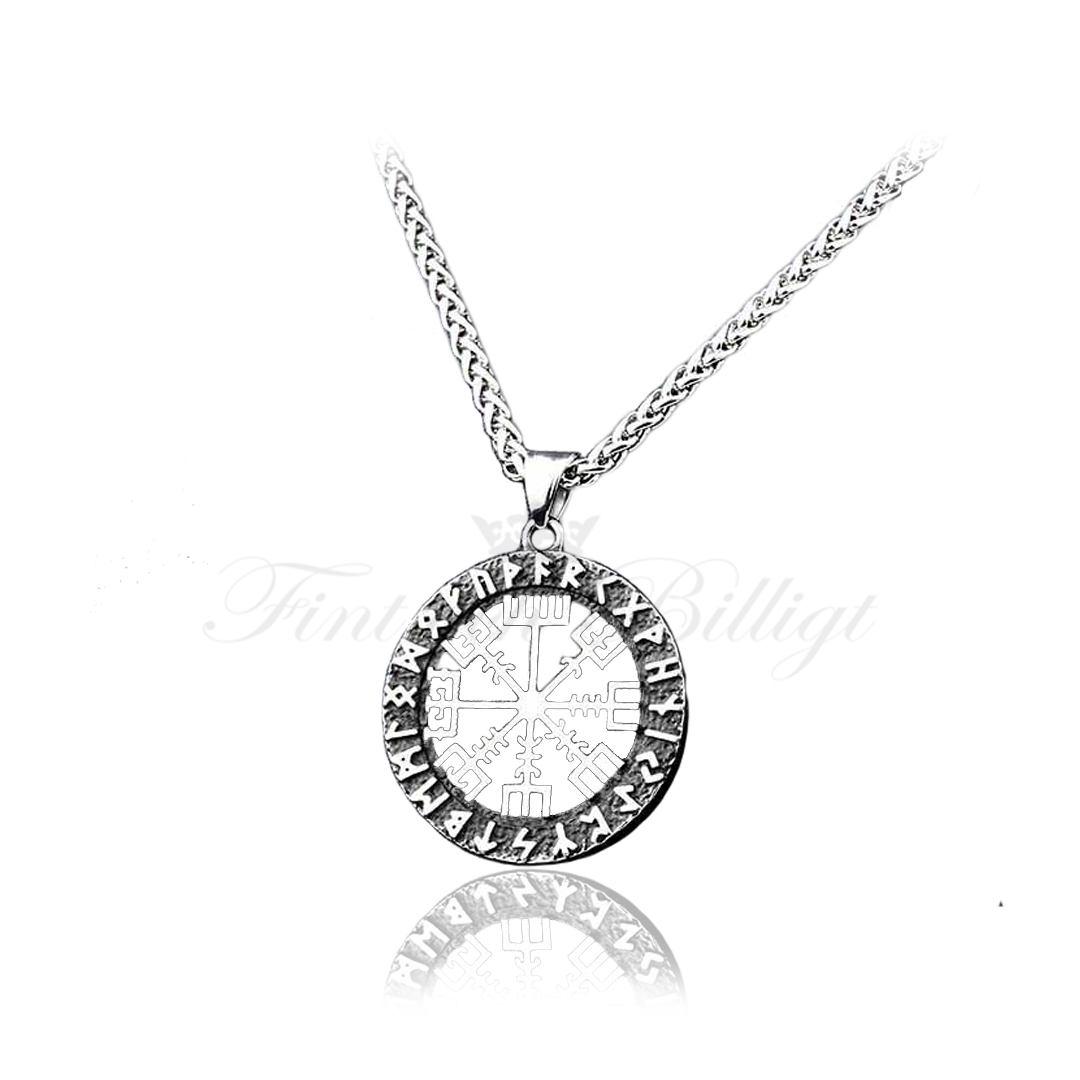
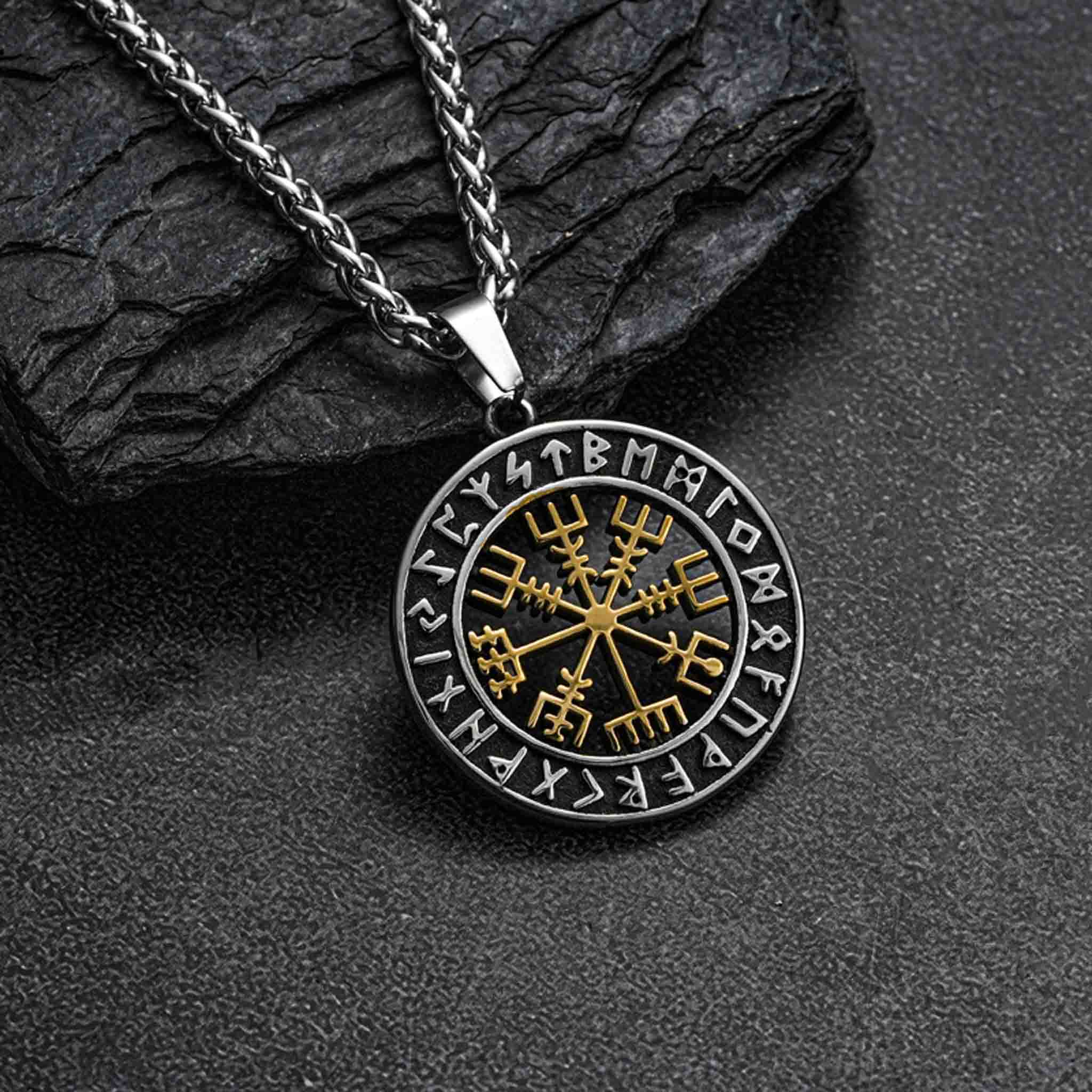
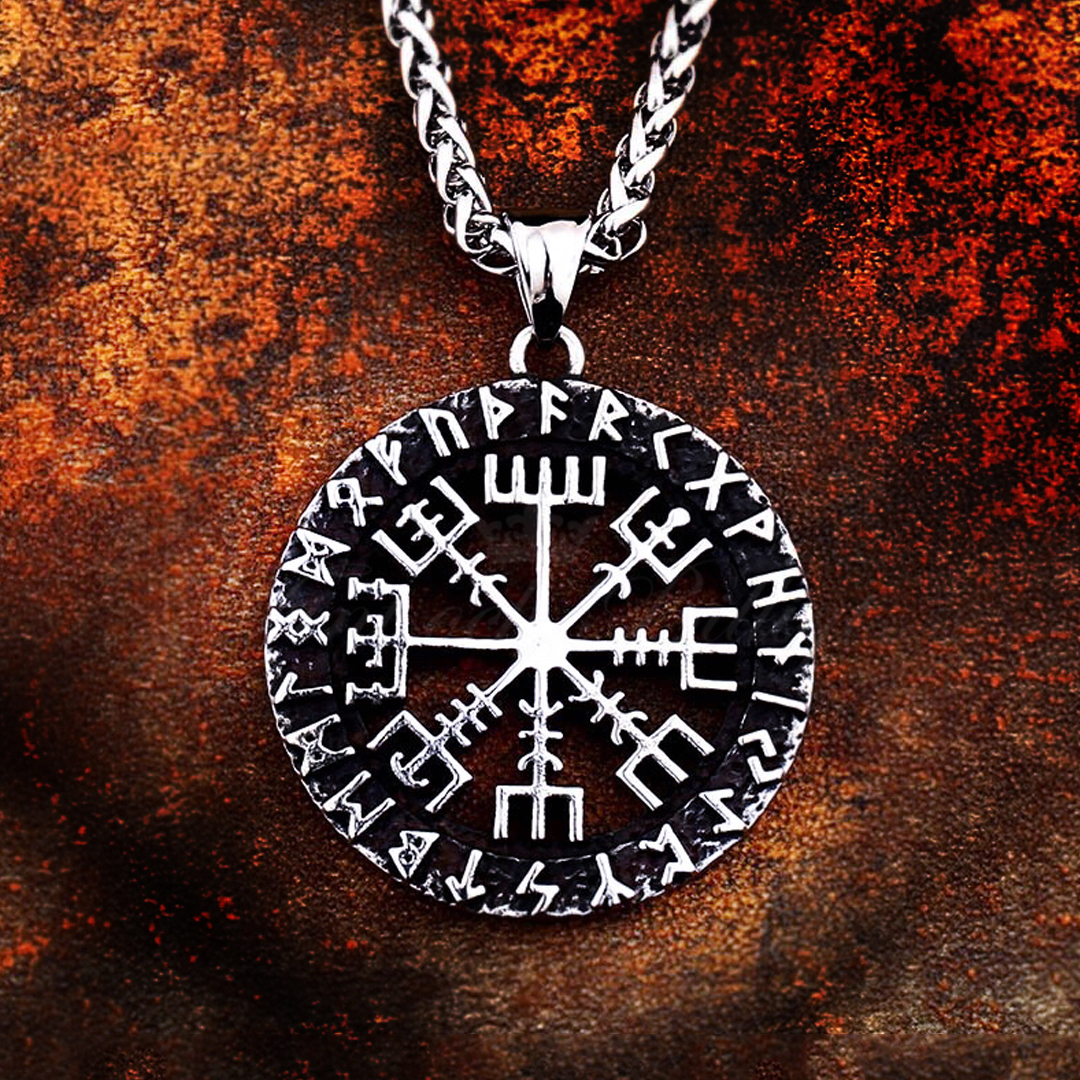
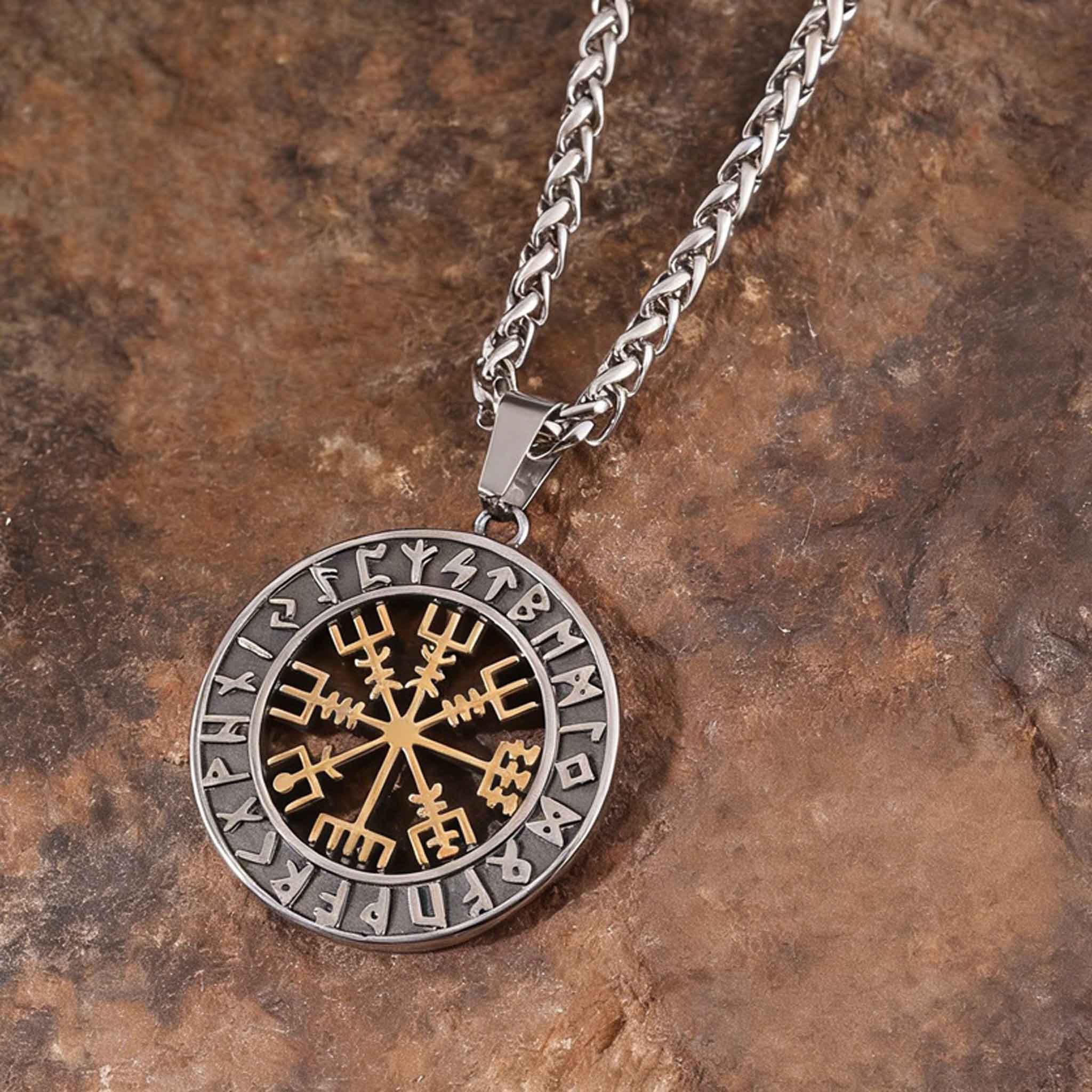
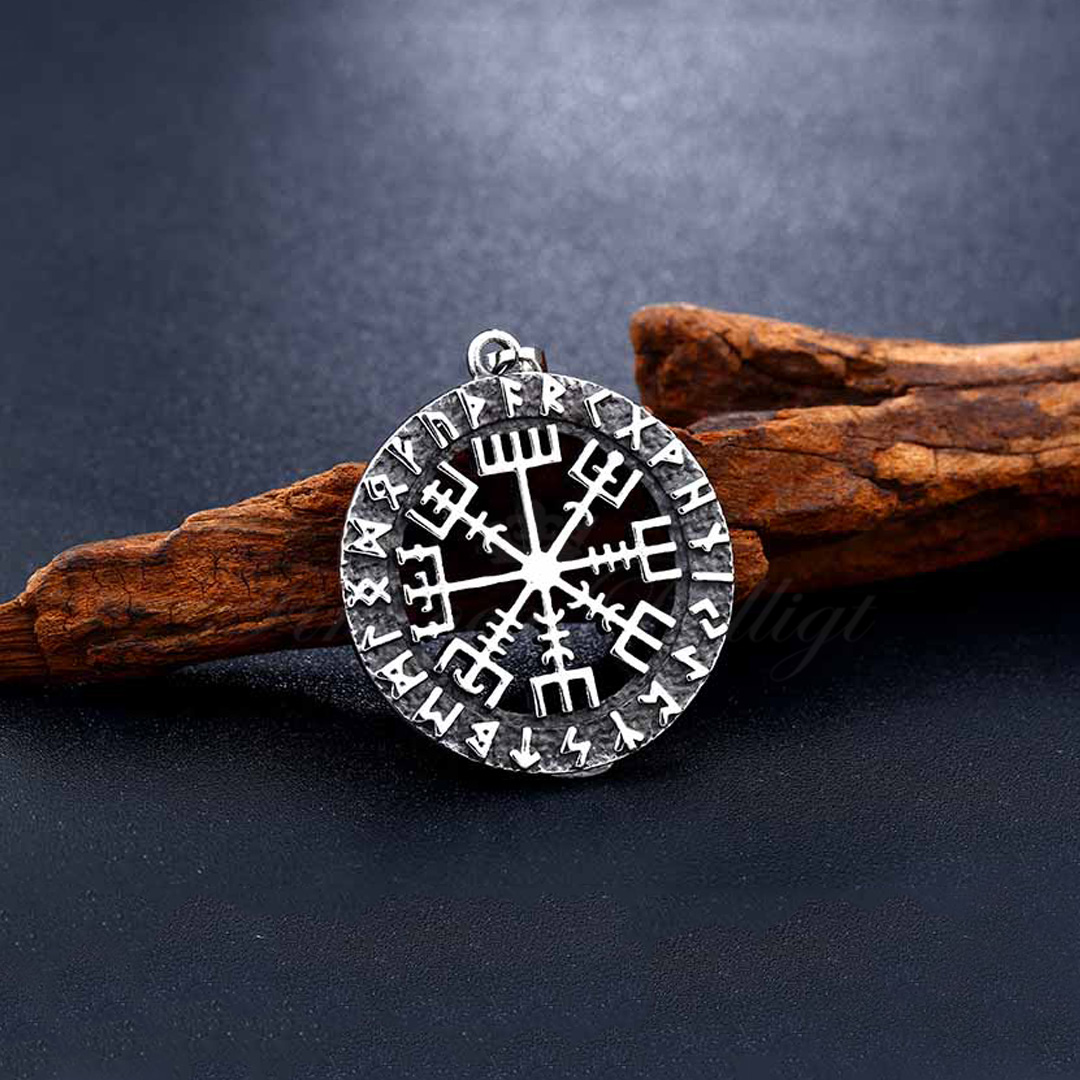
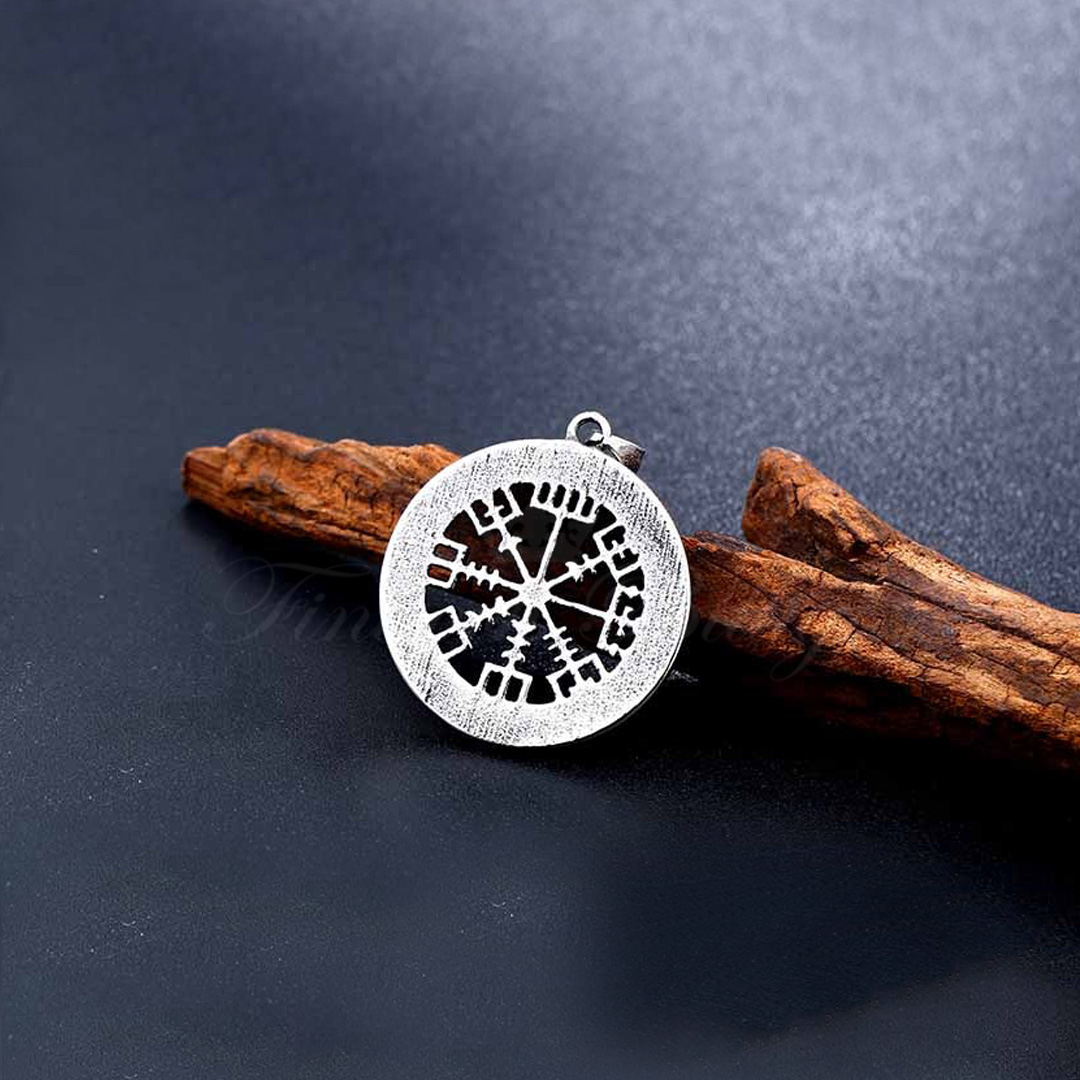

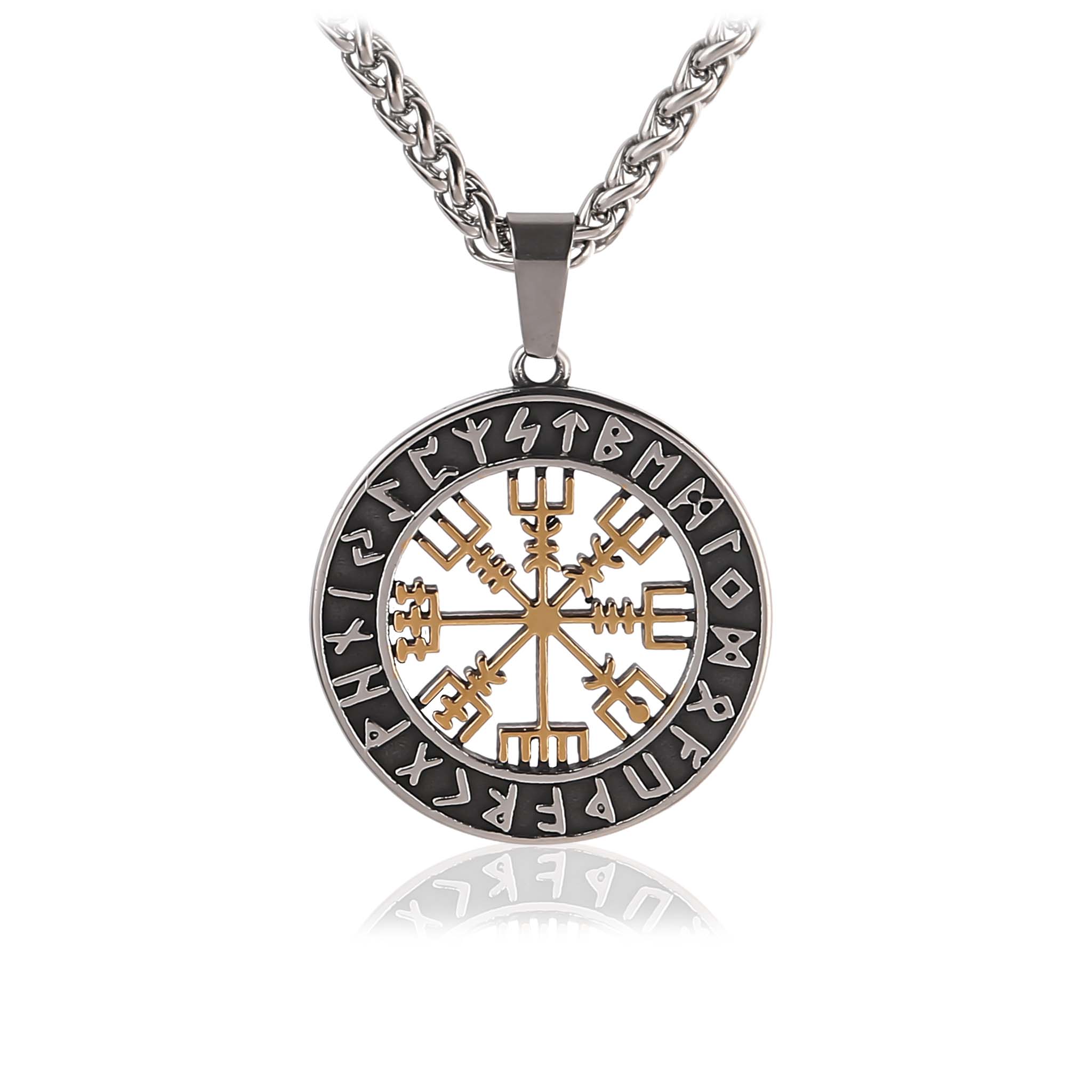
Vegvisir Viking Compass – Norse Amulet Necklace (Multiple choices)
 ✅ Pay after delivery. Safe and secure with Svea.
 Secure payment by card
 Paypal Secure and Fast payment
Order the Vegvisir necklace today – let the compass guide you
Why choose the Vegvisir Viking Compass
- Authentic Norse Vegvisir symbol
- Represents protection and guidance
- Available in silver or gold
- Timeless Viking-inspired design
- Suitable for men and women
- Meaningful gift or personal talisman
- Fast delivery and trusted quality from Fint och Billigt
A symbol of protection and direction from Norse mythology
Never lose your way. Vegvisir, the legendary Viking compass, was believed to guide its bearer safely through any storm. This necklace is a powerful Norse amulet rooted in ancient belief.Description
Article no.: HBS026
Model: Vegvisir Viking Compass Pendant
Material: 316L surgical steel
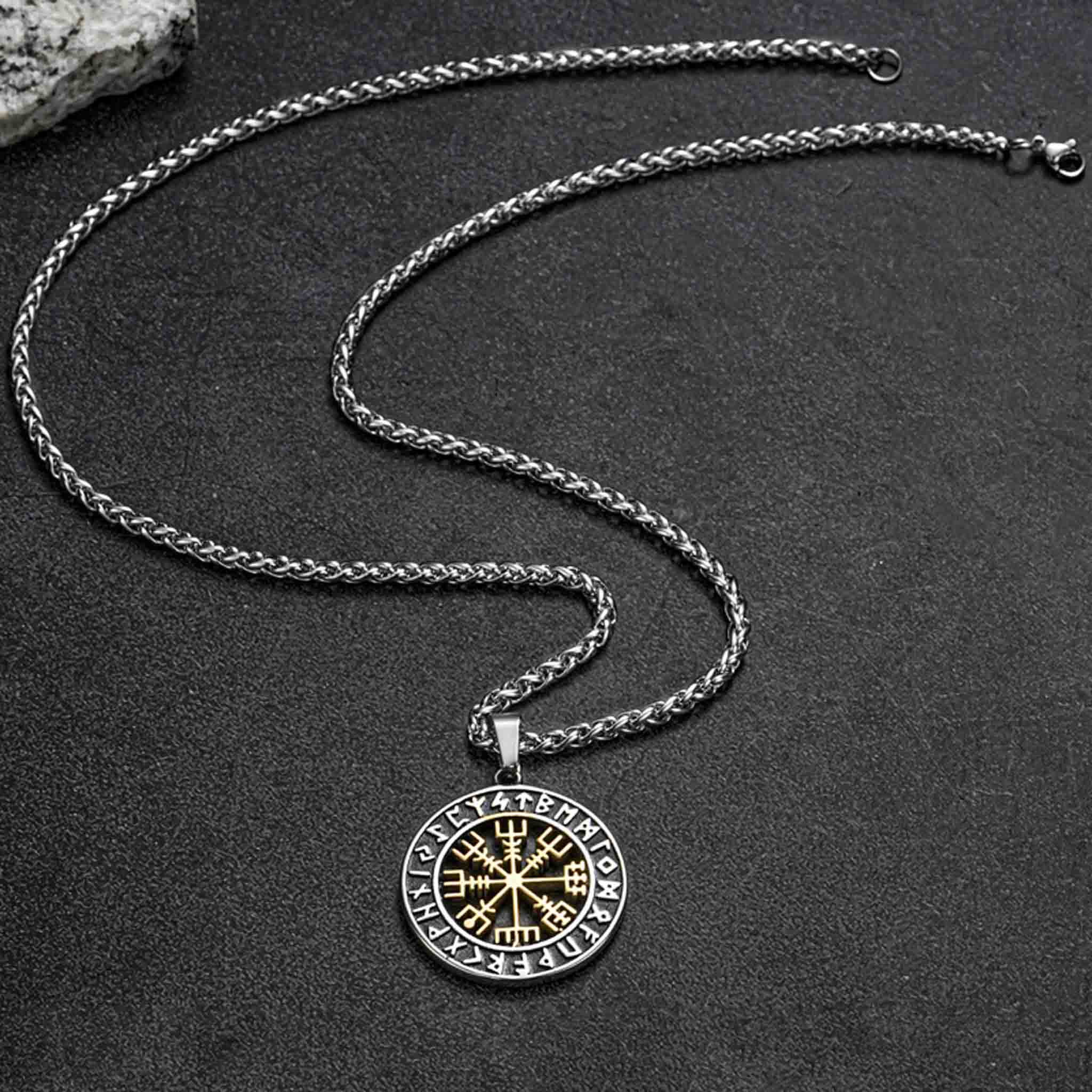
Color: Silver, Silver/Gold
Surface: Rustic, Glossy and matt
Chain: Wheat chain
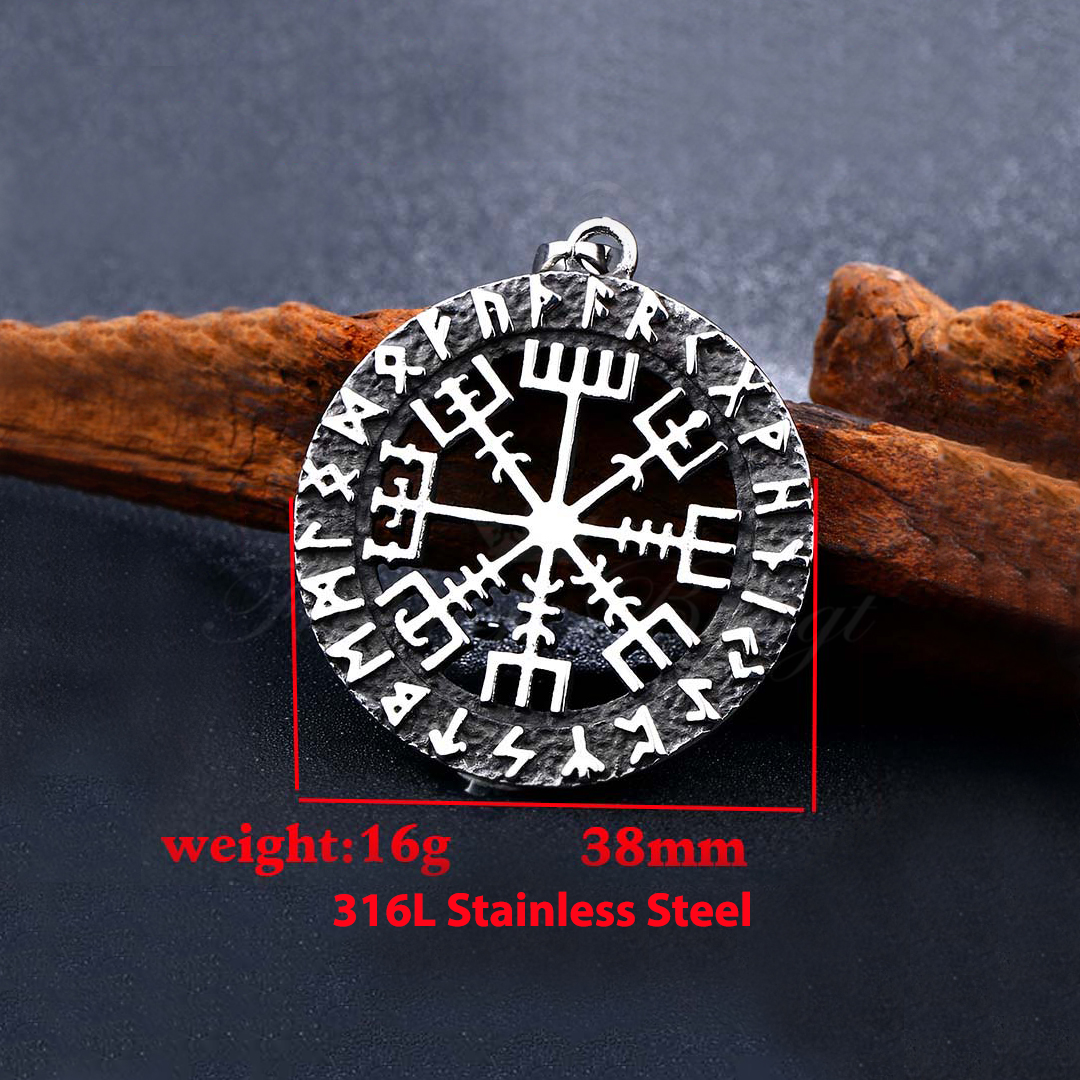
Pendant size: WxH 38mm x 50mm (gold 34mm x 46mm) Thickness: 4mm
Chain size: Length: 50cm, 60cm or 70cm, Width: 4mm
Weight: approx. 40g
Made of surgical steel and is nickel-free
Choose from several different lengths.
Vegvisir is a magical protective and guiding symbol with the following meaning:
"He who uses this symbol will never lose his way in storms or bad weather even when his own path is not known"
"The wearer of this symbol will not lose his way during storms and bad weather, even if he does not know of his destination".
Perfect as a present or Christmas present. Excellent gift ideas for Mother's Day, Father's Day or other holidays.
Vegvisir - Pronounced “VEGG-vee-seer”)
This beautiful handmade Viking jewelry in the form of a compass with the 24 Old Norse runes around it, which originates from about 200 years after Christ, makes this Viking necklace a piece of history in itself.
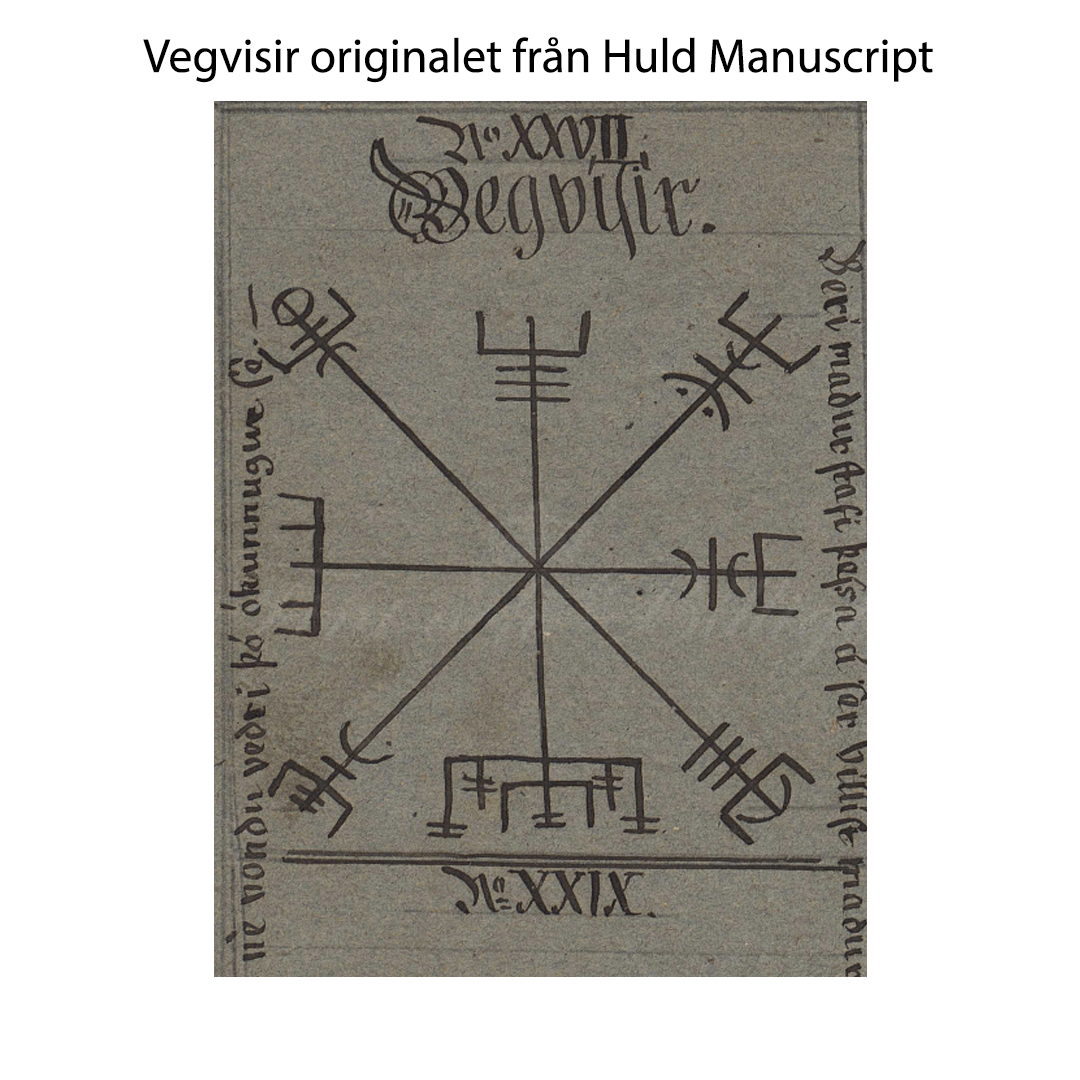
Vegvisir is a magical protective and guiding symbol. What is written in the Huld Manuscript about the Vegvisor is the following text:
"Nose. XXVII + XXIX. Vegvisir.Beri mamm stafi eisesa á sér villist mamm ekki í hríðum né wondu veðri þó ókunnugur sá.”
Translation:
"If this sign is worn, one will never lose one's way in storms or bad weather, even when the way is not known."
"The wearer of this symbol will not lose his way during storms and bad weather, even if he does not know of his destination".
Vegvisir is originally mentioned in two sources, partly in the Icelandic collection of wands of wizards called Galdrabok (The Magister Book) which were originally manuals for magic and the Huld Manuscript from the 19th century by Geir Vigfusson.
Fen Alraun has a theory based on that the symbol would contain 8 different protective spells on each staff, which means that as a whole it becomes a powerful staff spell that protects against many different kinds of obstacles that can cause you to lose your way.
Nor does he consider it necessary to understand the meaning of each syllable:
As long as it is drawn correctly each time, it will retain its power.
The shape of the symbol in the Huld Manuscript is square while that from Galdraskræða Skugga is designed to fit in a circle. The drawing was made for Ólafur Davíðsson.
Fen Alraun writes that by making a small change, in this case making the rods the same length, affects the power of magic very little. This means that Vegvisir does at least as well in a circular version inside a circle.
There is no change in the magic because the symbols themselves have not changed.
Beri mamm stafi ésa á sér villist mamm ekki íhríðum né bado veðri þó ókunnugur sá
Carry these staves with you and you won't get lost in storms or bad weather, even though in unfamiliar surrounds.
The rune line that was mainly used in divination is the Old Norse 24 rune futhark which arose around 200 years after Christ. It is called futhark because the first 6 runes form the word futhark; feh, ur, thurs, ass, reid and ken.
The purpose of the runes was mainly to record various things but also for divination and spells. Divination with runes is an ancient tool that has close contact with our ancestors and their traditions.
Material: 316L surgical steel
Color: Silver, Silver/Gold
Surface: Rustic, Glossy and matt
Chain: Wheat chain
Pendant size: WxH 38mm x 50mm (gold 34mm x 46mm) Thickness: 4mm
Chain size: Length: 50cm, 60cm or 70cm, Width: 4mm
Weight: approx. 40g
Vegvisir Viking Compass – Norse Amulet Necklace
Supplied with a 4mm Spike chain.Made of surgical steel and is nickel-free
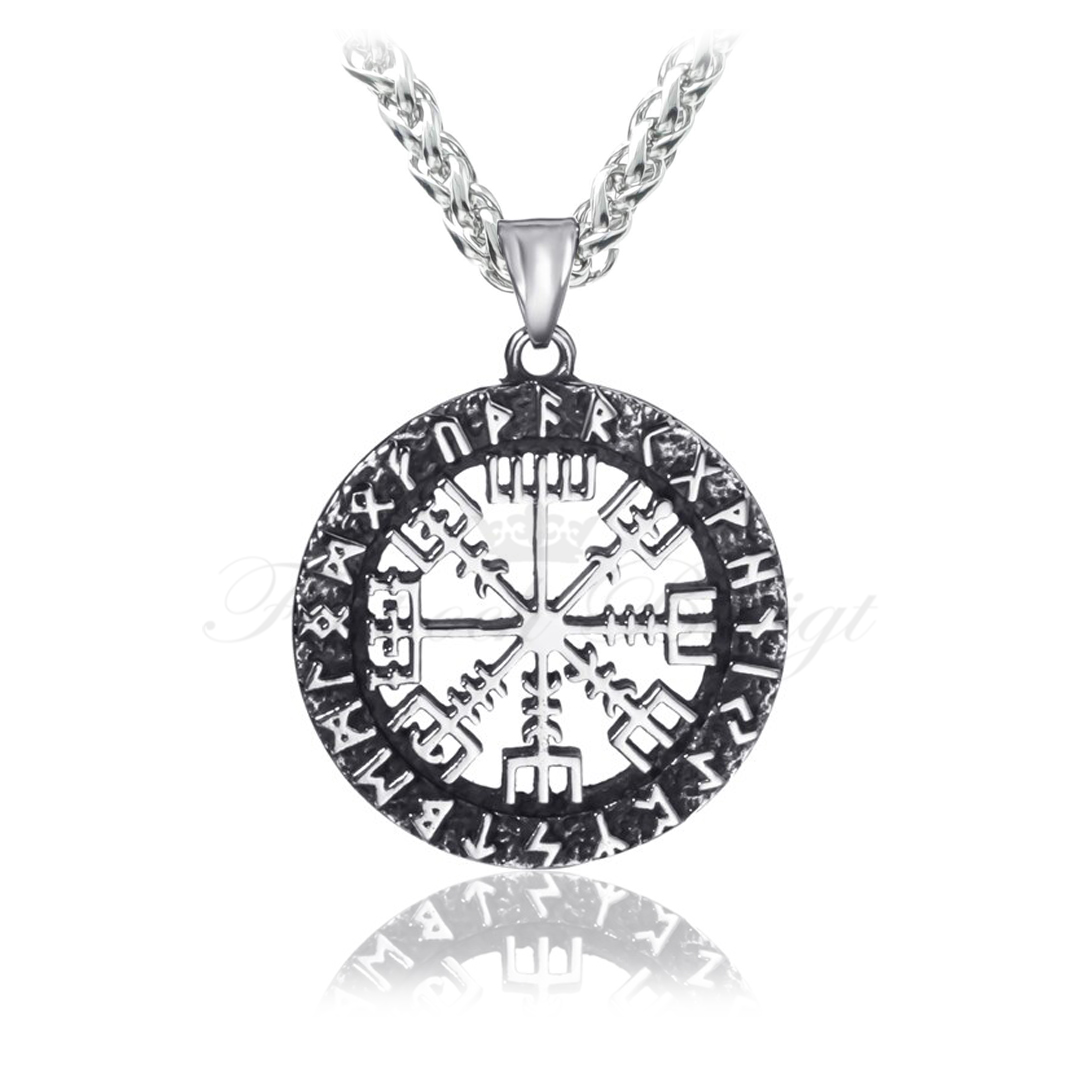
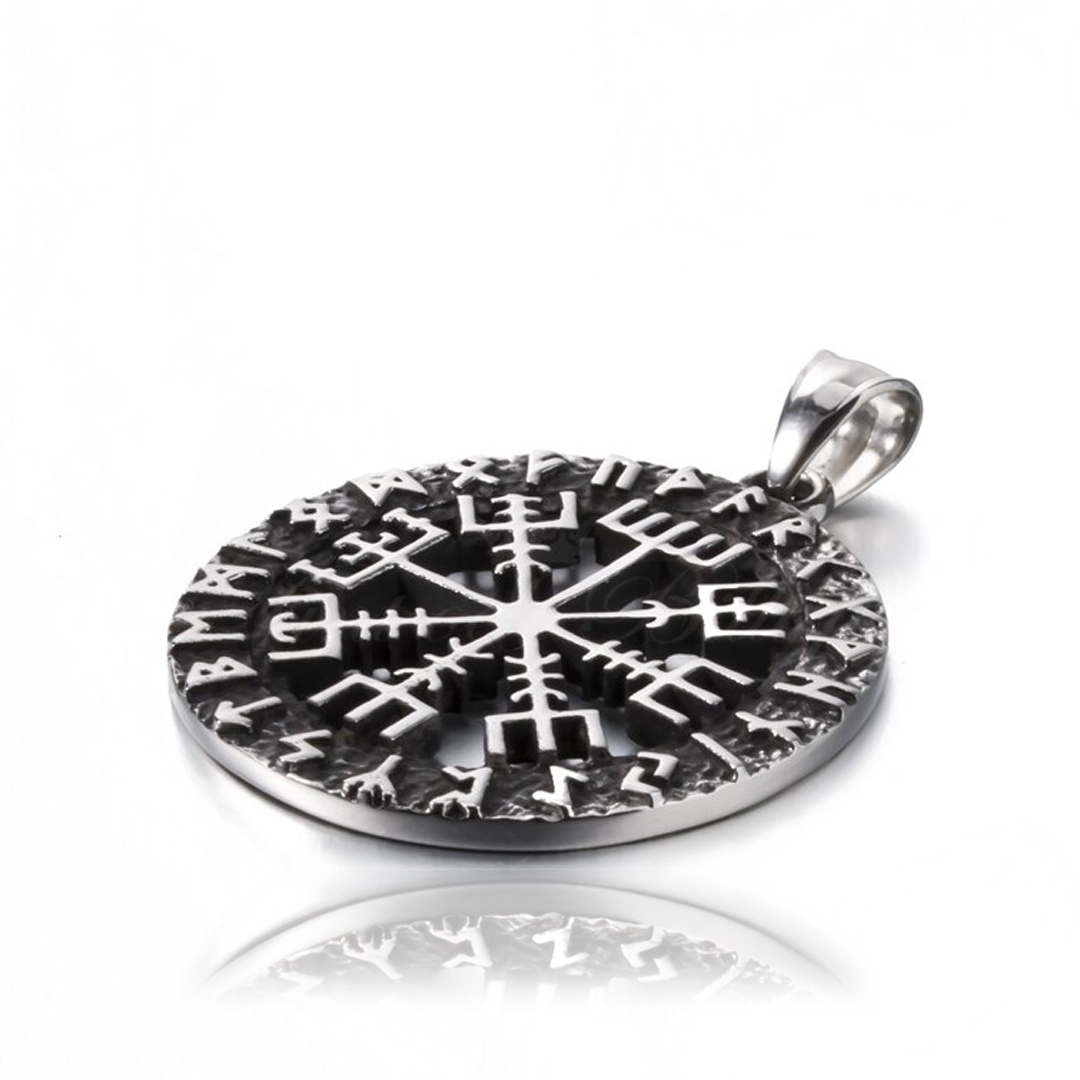
This Vegvisir Viking Compass necklace features a finely detailed Futhark compass design, inspired by Norse mythology. Available in silver or gold finish, it blends ancient symbolism with modern craftsmanship.
Worn as a symbol of guidance, strength, and protection, this necklace is ideal for everyday wear or as a meaningful gift.
Vegvisir – the Viking compass that guides the soul
Vegvisir Viking Compass is a handmade Viking necklace in solid steel with an amulet in the shape of a compass also known as Viking compass or Rune compass surrounded by the 24 Old Norse runes "Futhark" for divination, spells and the holy patron.Choose from several different lengths.
Vegvisir is a magical protective and guiding symbol with the following meaning:
"He who uses this symbol will never lose his way in storms or bad weather even when his own path is not known"
"The wearer of this symbol will not lose his way during storms and bad weather, even if he does not know of his destination".
Perfect as a present or Christmas present. Excellent gift ideas for Mother's Day, Father's Day or other holidays.
Vegvisir - Pronounced “VEGG-vee-seer”)
This beautiful handmade Viking jewelry in the form of a compass with the 24 Old Norse runes around it, which originates from about 200 years after Christ, makes this Viking necklace a piece of history in itself.
Vegvisir is a magical protective and guiding symbol. What is written in the Huld Manuscript about the Vegvisor is the following text:
"Nose. XXVII + XXIX. Vegvisir.Beri mamm stafi eisesa á sér villist mamm ekki í hríðum né wondu veðri þó ókunnugur sá.”
Translation:
"If this sign is worn, one will never lose one's way in storms or bad weather, even when the way is not known."
"The wearer of this symbol will not lose his way during storms and bad weather, even if he does not know of his destination".
Vegvisir is originally mentioned in two sources, partly in the Icelandic collection of wands of wizards called Galdrabok (The Magister Book) which were originally manuals for magic and the Huld Manuscript from the 19th century by Geir Vigfusson.
Fen Alraun has a theory based on that the symbol would contain 8 different protective spells on each staff, which means that as a whole it becomes a powerful staff spell that protects against many different kinds of obstacles that can cause you to lose your way.
Nor does he consider it necessary to understand the meaning of each syllable:
As long as it is drawn correctly each time, it will retain its power.
The shape of the symbol in the Huld Manuscript is square while that from Galdraskræða Skugga is designed to fit in a circle. The drawing was made for Ólafur Davíðsson.
Fen Alraun writes that by making a small change, in this case making the rods the same length, affects the power of magic very little. This means that Vegvisir does at least as well in a circular version inside a circle.
There is no change in the magic because the symbols themselves have not changed.
Beri mamm stafi ésa á sér villist mamm ekki íhríðum né bado veðri þó ókunnugur sá
Carry these staves with you and you won't get lost in storms or bad weather, even though in unfamiliar surrounds.
The rune line that was mainly used in divination is the Old Norse 24 rune futhark which arose around 200 years after Christ. It is called futhark because the first 6 runes form the word futhark; feh, ur, thurs, ass, reid and ken.
The purpose of the runes was mainly to record various things but also for divination and spells. Divination with runes is an ancient tool that has close contact with our ancestors and their traditions.
- BrandFint och Billigt
- ColorSilver
- ConditionNew
- Material316L Stainless Steel
- Suggested age groupAdult (typically teens or older)
- Suggested genderMale